Balance Training and Fall Prevention: How Targeted Exercise Protects People with Chronic Conditions
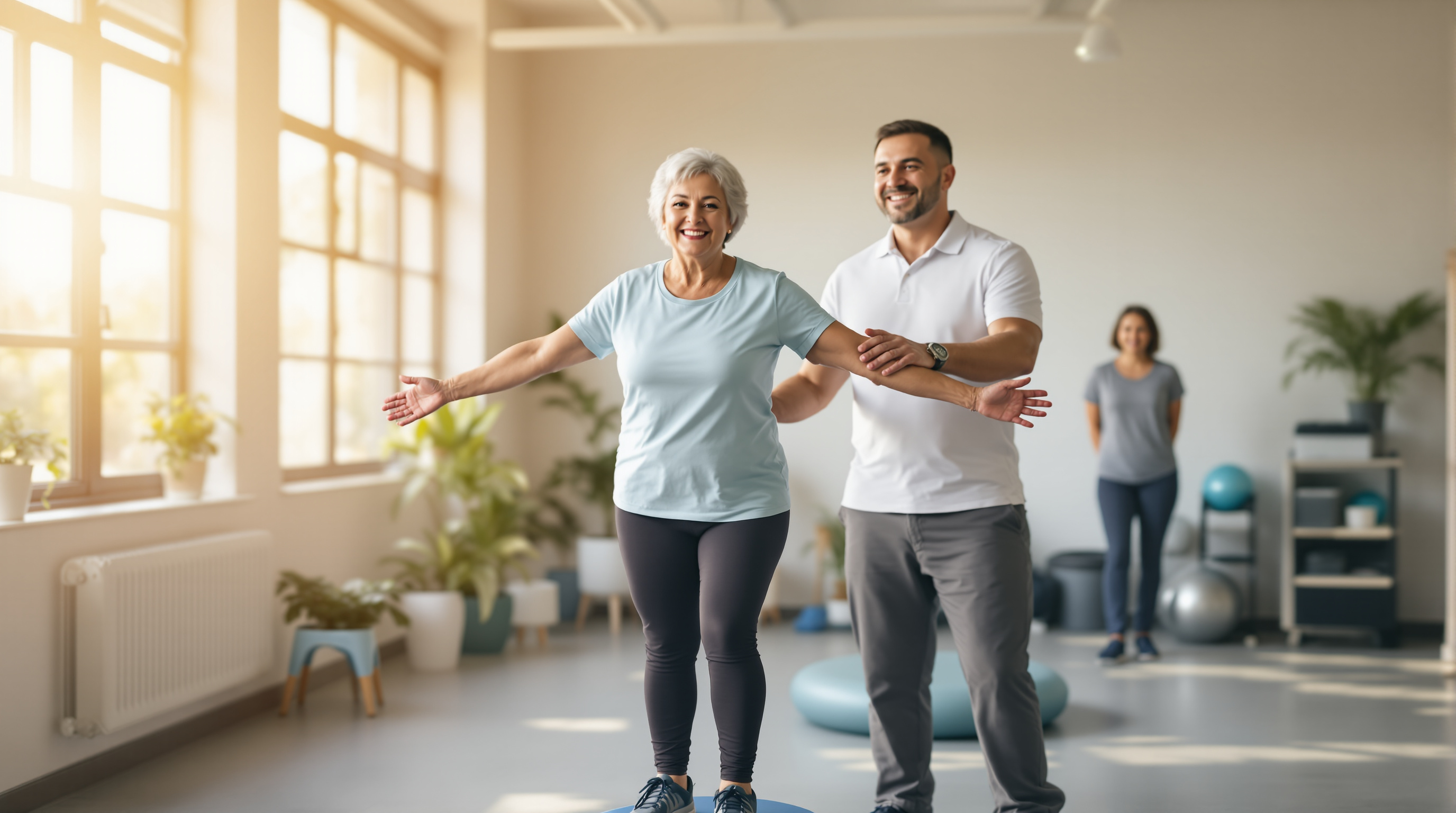
Balance Training and Fall Prevention: How Targeted Exercise Protects People with Chronic Conditions
Medical Disclaimer: This article is for informational purposes only and does not constitute medical advice. Always consult with a qualified healthcare provider before making changes to your medications, supplements, or health regimen.
Falls are the leading cause of injury-related death among adults over 65, and chronic conditions dramatically amplify that risk. Peripheral neuropathy, osteoporosis, Parkinson's disease, type 2 diabetes, and even long-term medication use can erode the balance systems your body relies on every second of every day. The good news: targeted balance training is one of the most evidence-backed interventions available — and it works at any age.
Why Chronic Conditions Undermine Balance
Balance is not a single system. It depends on three overlapping inputs:
- Vestibular system — the inner ear detects head position and movement
- Proprioception — sensory receptors in muscles, joints, and tendons signal body position
- Vision — the eyes provide spatial orientation cues
- Peripheral neuropathy (common in diabetes and chemotherapy patients) damages the nerve fibers that carry proprioceptive signals from the feet and legs
- Osteoporosis does not impair balance directly, but a fall becomes catastrophic — hip fractures carry a one-year mortality rate of up to 30% in older adults (NIH, 2023)
- Parkinson's disease disrupts the basal ganglia circuits that coordinate automatic postural adjustments
- Vestibular disorders (including benign paroxysmal positional vertigo, or BPPV) cause sudden dizziness that triggers falls
- Polypharmacy — taking four or more medications — increases fall risk by 35%, largely through sedation, orthostatic hypotension, and impaired reaction time (CDC, 2023)
- Were performed at least two to three times per week
- Included exercises that progressively challenged stability (not just static standing)
- Continued for at least 12 weeks
- Tandem stance — stand with one foot directly in front of the other, heel to toe; hold 30 seconds each side
- Single-leg stand — lift one foot slightly off the floor; hold 10–30 seconds; progress by closing eyes
- Weight shifts — slowly shift weight side to side and front to back while standing
- Heel-to-toe walking — walk in a straight line placing heel directly in front of toe
- Lateral stepping — step sideways along a line, crossing feet alternately
- Sit-to-stand — rise from a chair without using hands; builds hip and ankle stability simultaneously
- Foam pad standing — perform single-leg stands on a foam balance pad
- Bosu ball exercises — squats or single-leg stands on the rounded surface
- Dual-task training — count backward from 100 by 3s while walking; this mimics real-world cognitive demands that increase fall risk
- Benzodiazepines and sleep aids — impair reaction time and muscle coordination
- Alpha-blockers and antihypertensives — can cause orthostatic hypotension (blood pressure drop on standing)
- Diuretics — dehydration and electrolyte imbalances affect neuromuscular function
- Opioids — sedation and impaired proprioception
- Antidepressants (especially TCAs and SSRIs) — associated with a 48% increased fall risk in older adults (BMJ, 2018)
- Vitamin D (25-OH) — levels below 20 ng/mL are associated with muscle weakness and impaired neuromuscular function; optimal range for fall prevention is 30–50 ng/mL (Endocrine Society)
- Magnesium — deficiency impairs nerve conduction and muscle contraction; serum levels below 1.7 mg/dL warrant attention
- HbA1c — chronic hyperglycemia accelerates neuropathy progression; keeping HbA1c below 7% slows nerve damage
- TSH — both hypothyroidism and hyperthyroidism impair balance and muscle function
- Electrolytes (sodium, potassium) — imbalances cause muscle weakness and dizziness
- 3 days per week: 15–20 minutes of dedicated balance exercises (levels 1–3 above)
- Daily habit: practice single-leg stands while brushing teeth or waiting for coffee to brew
- Combine with strength training: lower-body resistance exercises (squats, lunges, calf raises) reinforce the muscles that execute balance corrections
- Environmental audit: remove trip hazards at home, improve lighting, install grab bars in bathrooms
- Falls are largely preventable — balance training reduces fall rates by ~23% in community-dwelling adults
- Chronic conditions including diabetes, Parkinson's, and osteoporosis specifically impair the systems that maintain stability
- Progressive balance training (stable → unstable → dual-task) produces the strongest results
- Vitamin D, magnesium, HbA1c, and electrolyte levels all influence neuromuscular function and fall risk
- Medication review is an underutilized but powerful fall-prevention tool
Chronic conditions disrupt one or more of these channels:
What the Research Says About Balance Training
A landmark Cochrane Review of 108 randomized controlled trials (Sherrington et al., 2019, published in the British Journal of Sports Medicine) found that exercise programs that challenge balance reduce fall rates by approximately 23% in community-dwelling older adults. The effect was strongest when programs:
For people with specific chronic conditions, the evidence is equally compelling:
Diabetes and Peripheral Neuropathy
A 2021 meta-analysis in Diabetes Care found that balance and proprioceptive training reduced fall incidence by 28% in adults with diabetic peripheral neuropathy. Exercises that stimulate the plantar surface of the foot — such as standing on textured mats or performing single-leg stands on foam — help compensate for reduced nerve signal quality.
Parkinson's Disease
Tai chi has been studied extensively in Parkinson's patients. A 2012 NEJM trial (Li et al.) found that twice-weekly tai chi reduced falls by 67% compared to resistance training alone and 70% compared to stretching. More recent research confirms that any exercise emphasizing weight shifting, turning, and dual-task coordination (moving while thinking) produces meaningful gains.
Osteoporosis
For people with low bone density, the goal is twofold: improve balance to prevent falls AND apply bone-loading forces to slow density loss. Weight-bearing balance exercises — single-leg stands, step-ups, and heel raises — accomplish both simultaneously. The Journal of Bone and Mineral Research (2022) confirmed that multicomponent programs combining balance and resistance training reduced fracture risk by 40% over two years.
Core Balance Exercises: A Progressive Framework
Balance training should be progressive — starting with stable surfaces and advancing to unstable ones as competence grows.
Level 1: Stable Surface Foundations
Level 2: Dynamic Challenges
Level 3: Unstable Surfaces and Dual Tasks
Medication Awareness and Fall Risk
If you or a loved one takes any of the following medication classes, discuss fall risk with your prescriber:
A medication review by your pharmacist or physician — sometimes called a "brown bag review" — can identify combinations that compound fall risk.
Lab Markers Worth Monitoring
Several lab values are directly relevant to fall and balance risk:
Building a Sustainable Balance Practice
Consistency matters more than intensity. Here is a practical weekly framework:
For those with significant neuropathy or Parkinson's, working with a physical therapist for an individualized program is strongly recommended before progressing to unstable surfaces.
Key Takeaways
---
Take Control of Your Health Data
Ready to cross-reference your medications, supplements, and lab results in one place? [Health Intelligence Analyzer](/) helps you identify potential interactions, flag abnormal lab values, and optimize your health regimen with AI-powered insights. Start your free analysis today.