Blood Flow Restriction Training: The Science-Backed Method for Building Strength with Light Weights
Blood Flow Restriction Training: The Science-Backed Method for Building Strength with Light Weights
Medical Disclaimer: This article is for informational purposes only and does not constitute medical advice. Always consult with a qualified healthcare provider before making changes to your medications, supplements, or health regimen.
Imagine building significant muscle and strength using weights so light they barely feel challenging. That's the promise of blood flow restriction (BFR) training — a technique once reserved for elite rehabilitation clinics that is now gaining mainstream traction among athletes, older adults, and anyone who needs to train around injury or joint pain.
The science behind BFR is compelling, and the measurable physiological changes it produces are well-documented in peer-reviewed literature. Here's what you need to know.
What Is Blood Flow Restriction Training?
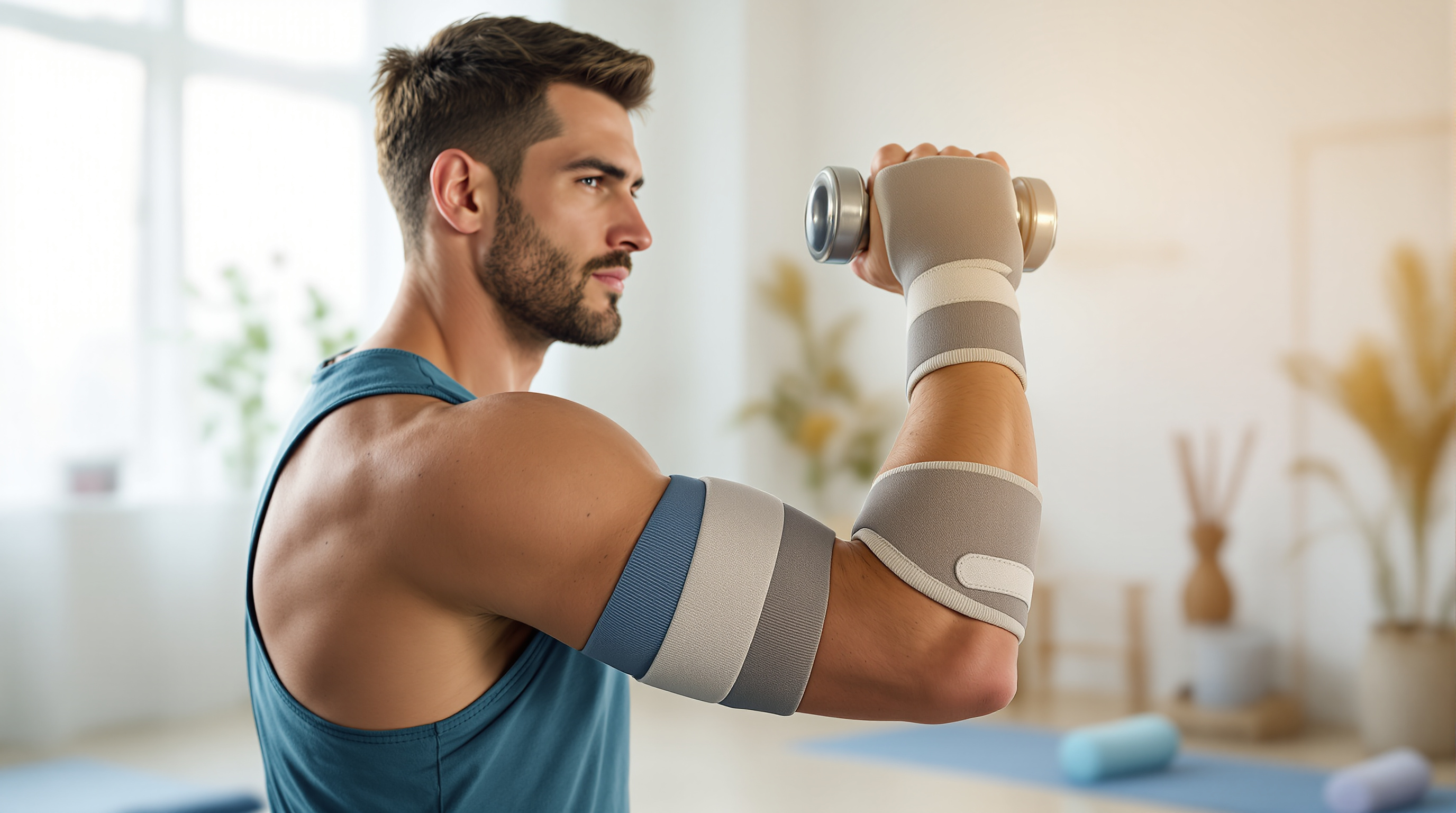
BFR training involves applying a cuff or wrap to the proximal portion of a limb — typically the upper arm or upper thigh — to partially restrict venous blood return while allowing arterial inflow to continue. You then perform resistance exercises at low loads (typically 20–30% of your one-repetition maximum, or 1RM) with high repetitions (15–30 reps per set).
The result: your muscles experience a metabolic environment similar to high-intensity training, even though the external load is minimal.
The Mechanism: Why It Works
The physiological effects of BFR training are driven by several interconnected mechanisms:
- Metabolite accumulation: Restricting venous outflow traps metabolic byproducts like lactate and hydrogen ions in the working muscle, creating a powerful anabolic stimulus.
- Fast-twitch fiber recruitment: The metabolic stress forces early recruitment of type II (fast-twitch) muscle fibers — the fibers most responsible for strength and hypertrophy — even at low loads.
- Hormonal response: BFR training triggers a significant release of growth hormone (GH) and insulin-like growth factor-1 (IGF-1), both critical for muscle protein synthesis.
- Cell swelling: The pooling of blood in the muscle causes cellular swelling, which is an independent anabolic signal that promotes muscle growth.
- Load: 20–30% of 1RM
- Sets: 4 sets per exercise (1 set of 30 reps, followed by 3 sets of 15 reps)
- Rest: 30–60 seconds between sets (cuff remains on during rest)
- Frequency: 2–4 sessions per week per muscle group
- Session duration: 15–20 minutes per muscle group
- Upper body: Bicep curls, tricep extensions, lateral raises, chest press
- Lower body: Leg press, leg extension, leg curl, calf raises, bodyweight squats
- Aerobic BFR: Walking with cuffs applied to the thighs has shown cardiovascular and muscular benefits in older adults
- IGF-1 and growth hormone: Acute spikes of GH following BFR sessions can be 10–290 times baseline, according to research from the University of Tokyo ([PubMed, 2000](https://pubmed.ncbi.nlm.nih.gov/10919961/)).
- Muscle cross-sectional area: MRI studies confirm measurable hypertrophy within 4–6 weeks of consistent BFR training.
- Functional strength: Grip strength, leg press strength, and walking speed all improve in older adult populations.
- Bone density: Emerging evidence suggests BFR may stimulate bone formation markers, though more research is needed.
- Cardiovascular markers: BFR walking has been shown to reduce resting blood pressure and improve endothelial function in some populations.
- Deep vein thrombosis (DVT) or a history of blood clots
- Peripheral artery disease or poor circulation
- Uncontrolled hypertension
- Open wounds or active infection in the limb
- Sickle cell disease
- Pregnancy
A landmark meta-analysis published in the Journal of Strength and Conditioning Research confirmed that BFR training produces hypertrophy and strength gains comparable to traditional high-load resistance training, despite using loads 40–60% lighter ([NCBI, 2019](https://pubmed.ncbi.nlm.nih.gov/30431453/)).
Who Benefits Most from BFR Training?
Older Adults and Sarcopenia Prevention
Sarcopenia — the age-related loss of muscle mass — is one of the strongest predictors of disability, falls, and mortality in older adults. Traditional heavy resistance training is often impractical for this population due to joint pain, osteoporosis, or cardiovascular limitations.
BFR training offers a compelling alternative. Research published in Medicine & Science in Sports & Exercise demonstrated that older adults performing BFR training at low loads achieved muscle hypertrophy and functional strength improvements comparable to those seen with conventional high-load training ([NIH/PubMed, 2012](https://pubmed.ncbi.nlm.nih.gov/22002517/)).
Post-Surgical and Injury Rehabilitation
Following orthopedic surgery — particularly ACL reconstruction, knee replacement, or rotator cuff repair — patients often cannot tolerate the loads required for traditional strength training. BFR allows meaningful muscle stimulus at loads that don't stress healing tissue.
The American Physical Therapy Association has recognized BFR as a valid rehabilitation tool, and it is now used in military, professional sports, and hospital rehabilitation settings worldwide.
Athletes Seeking Active Recovery
For competitive athletes, BFR training during deload weeks or recovery phases allows continued muscle stimulus without the systemic fatigue of heavy training. This preserves strength adaptations while the body recovers from high-intensity training blocks.
How to Perform BFR Training Safely
Equipment
Specialized BFR cuffs with pressure gauges are the gold standard. Consumer-grade elastic wraps can be used but require careful attention to tightness — the goal is a 7/10 perceived tightness on the upper limb, or 6/10 on the lower limb. Never use a tourniquet or apply pressure that causes numbness or sharp pain.
Protocol Guidelines
The most evidence-supported BFR protocol follows this structure:
Exercises Well-Suited to BFR
Measurable Health Markers Affected by BFR Training
BFR training produces quantifiable changes in several biomarkers:
Safety Considerations and Contraindications
BFR training is generally safe when performed correctly, but it is not appropriate for everyone. Consult your healthcare provider before starting BFR if you have:
Minor side effects — temporary bruising, skin redness, or muscle soreness — are common and typically resolve within 24–48 hours. Serious adverse events are rare when appropriate pressure and protocols are used.
Getting Started: A Practical First Session
If you're new to BFR training, start conservatively:
1. Apply the cuff to your upper arm or upper thigh at a 7/10 tightness (you should feel pressure but no pain or numbness).
2. Choose a weight you can lift for 30 repetitions with moderate effort.
3. Perform 1 set of 30 reps, rest 30 seconds, then 3 sets of 15 reps with 30-second rests.
4. Remove the cuff immediately after your final set.
5. Monitor for any unusual pain, numbness, or discoloration.
Most people notice a significant muscle pump and mild burning sensation — this is expected and indicates the metabolic stimulus is working.
---
Take Control of Your Health Data
Ready to cross-reference your medications, supplements, and lab results in one place? [Health Intelligence Analyzer](/) helps you identify potential interactions, flag abnormal lab values, and optimize your health regimen with AI-powered insights. Start your free analysis today.