Choline: The Essential Nutrient Most People Are Deficient In and Why It Matters
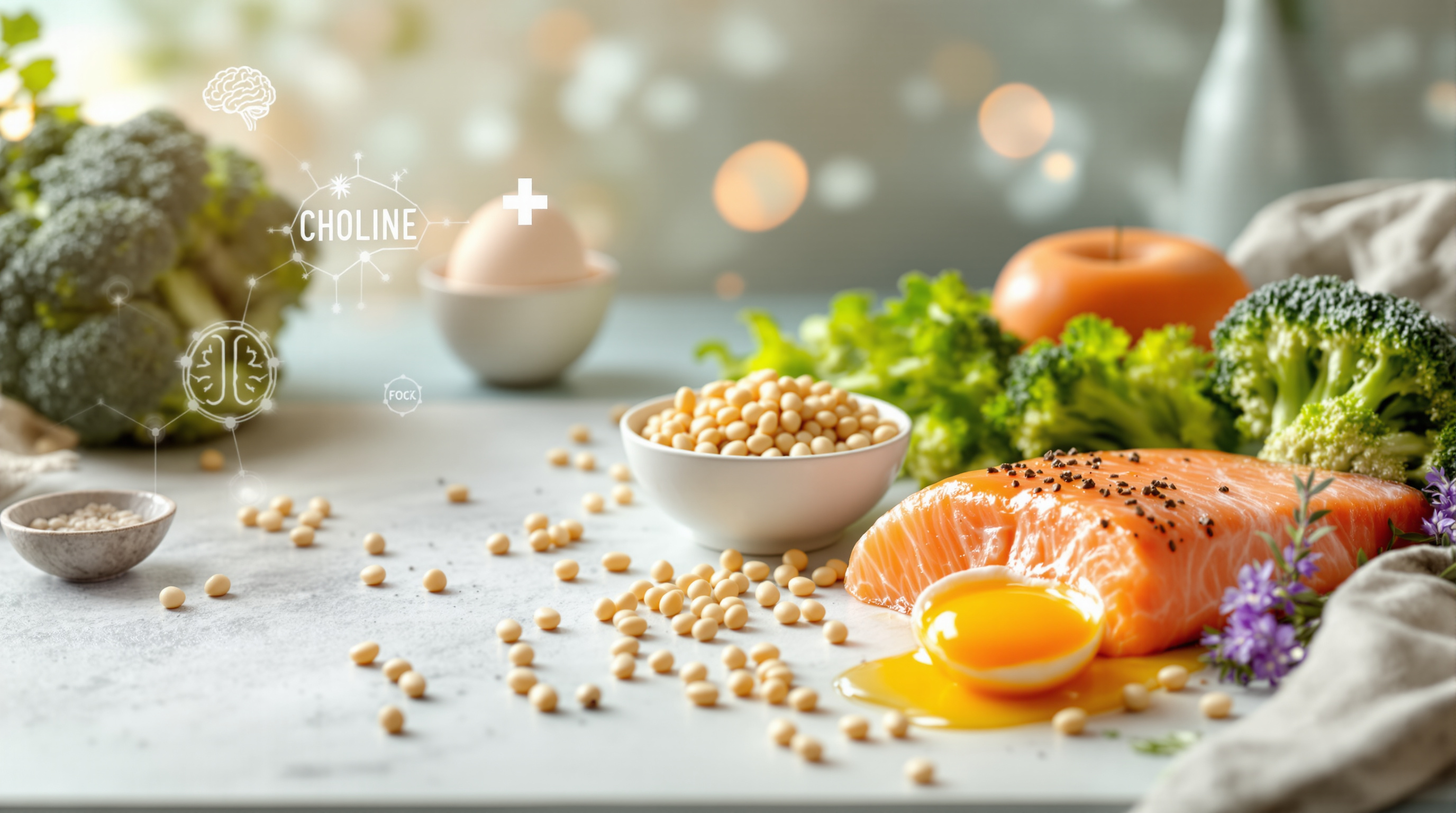
Choline: The Essential Nutrient Most People Are Deficient In and Why It Matters
Medical Disclaimer: This article is for informational purposes only and does not constitute medical advice. Always consult with a qualified healthcare provider before making changes to your medications, supplements, or health regimen.
Choline rarely makes headlines, yet it is one of the most important nutrients your body needs — and one of the most commonly under-consumed. Recognized as an essential nutrient by the Institute of Medicine in 1998, choline plays a foundational role in brain development, liver metabolism, nerve signaling, and cellular integrity. Despite its importance, surveys consistently show that fewer than 10% of Americans meet the adequate intake (AI) for choline, according to data from the National Institutes of Health (NIH).
What Is Choline and Why Does Your Body Need It?
Choline is a water-soluble compound that is neither a vitamin nor a mineral in the traditional sense, but it is grouped with the B-vitamin family due to its similar metabolic roles. Your body can synthesize small amounts of choline in the liver, but not nearly enough to meet daily requirements — making dietary intake essential.
Choline serves four primary biological functions:
- Cell membrane structure: Choline is a precursor to phosphatidylcholine, the dominant phospholipid in every cell membrane in your body. Without adequate choline, cell membranes lose integrity and function.
- Neurotransmitter synthesis: Choline is the direct precursor to acetylcholine, a neurotransmitter critical for memory, muscle control, and the autonomic nervous system.
- Liver fat metabolism: Choline is required for the export of fat from the liver via very-low-density lipoprotein (VLDL) particles. Deficiency leads to fat accumulation and non-alcoholic fatty liver disease (NAFLD).
- Methylation reactions: Choline donates methyl groups for DNA methylation and homocysteine metabolism, linking it to cardiovascular and epigenetic health.
- Adult men: 550 mg/day
- Adult women: 425 mg/day
- Pregnant women: 450 mg/day
- Breastfeeding women: 550 mg/day
- Pregnant women: Choline is critical for fetal brain and spinal cord development. Low maternal choline is associated with increased neural tube defect risk and impaired cognitive development in offspring, per research published in Nutrients (PMID: 28788094).
- Vegans and vegetarians: The richest dietary sources of choline are animal-based. Plant-based eaters must plan carefully to meet needs.
- People with MTHFR gene variants: Variants in the MTHFR gene impair folate metabolism, increasing choline demand as the body compensates through alternative methylation pathways.
- Postmenopausal women: Estrogen upregulates choline synthesis in the liver. After menopause, this protection disappears, raising deficiency risk significantly.
- Heavy alcohol consumers: Alcohol disrupts choline metabolism and accelerates liver fat accumulation in the context of low choline intake.
- Beef liver (3 oz): ~356 mg — the single richest source
- Eggs (1 large, whole): ~147 mg — primarily in the yolk
- Salmon (3 oz): ~187 mg
- Chicken breast (3 oz): ~72 mg
- Soybeans (½ cup cooked): ~107 mg
- Shiitake mushrooms (½ cup cooked): ~58 mg
- Kidney beans (½ cup cooked): ~45 mg
- Quinoa (1 cup cooked): ~43 mg
- A 2011 study in the American Journal of Clinical Nutrition found that higher choline intake was associated with better verbal and visual memory in adults aged 36–83.
- Research from the Framingham Heart Study found that higher plasma choline levels were associated with better cognitive performance and reduced white matter hyperintensities on brain MRI.
- Animal studies consistently show that choline supplementation during pregnancy produces offspring with enhanced memory and reduced age-related cognitive decline — effects that persist across the lifespan.
- Pregnant women who cannot meet needs through diet
- Vegans and vegetarians with limited food sources
- Individuals with confirmed MTHFR variants
- Those with diagnosed NAFLD working with a healthcare provider
- Choline bitartrate: Widely available and affordable; well-absorbed
- Alpha-GPC (alpha-glycerophosphocholine): Crosses the blood-brain barrier more efficiently; preferred for cognitive applications
- CDP-choline (citicoline): Converts to both choline and cytidine in the body; studied for cognitive support
- Phosphatidylcholine: The form found in food; also available as a supplement
- Choline is an essential nutrient required for brain function, liver health, cell membrane integrity, and methylation
- Most adults — especially pregnant women, vegans, and postmenopausal women — do not meet adequate intake levels
- Eggs and liver are the richest dietary sources; plant-based eaters must plan carefully
- Deficiency is a documented cause of fatty liver disease and is associated with cognitive decline
- Supplementation is an option when dietary intake is insufficient, with alpha-GPC and CDP-choline preferred for brain health applications
How Much Choline Do You Need?
The NIH Office of Dietary Supplements provides the following adequate intake (AI) guidelines:
These are AI values, not RDAs, because the evidence base for establishing a precise requirement is still evolving. Some researchers argue optimal intake for brain health may be higher, particularly during pregnancy and aging.
Who Is Most at Risk for Choline Deficiency?
Several groups face elevated deficiency risk:
Top Dietary Sources of Choline
The best food sources of choline include:
For context, two whole eggs provide roughly 294 mg of choline — more than half the daily AI for women. This is one reason nutrition researchers have revisited the decades-old advice to limit egg consumption.
Choline and Brain Health: What the Research Shows
Acetylcholine is the neurotransmitter most associated with learning and memory. Alzheimer's disease is characterized by a dramatic loss of acetylcholine-producing neurons, which is why cholinesterase inhibitor drugs (like donepezil) are used to slow cognitive decline by preserving existing acetylcholine.
Several prospective studies have examined dietary choline and cognitive outcomes:
While human intervention trials are still limited, the mechanistic and epidemiological evidence strongly supports adequate choline intake for long-term brain health.
Choline and Liver Health
The liver-choline connection is one of the most clinically established in nutrition science. Choline deficiency is a well-documented cause of non-alcoholic fatty liver disease (NAFLD). In controlled depletion studies, healthy adults fed a choline-deficient diet developed liver damage within weeks — damage that reversed upon choline repletion.
Choline enables the liver to package and export triglycerides as VLDL particles. Without sufficient choline, fat accumulates in hepatocytes, triggering inflammation and, over time, fibrosis. Given that NAFLD now affects an estimated 25% of the global population, choline adequacy is a clinically relevant consideration.
Should You Supplement with Choline?
For most people, optimizing dietary intake is the first step. However, supplementation may be warranted for:
Common supplement forms include:
Upper tolerable intake level (UL): The NIH sets the UL at 3,500 mg/day for adults. Doses above this threshold can cause fishy body odor, low blood pressure, sweating, and gastrointestinal distress. Supplementing within the 250–500 mg/day range is generally well-tolerated.
Key Takeaways
---
Take Control of Your Health Data
Ready to cross-reference your medications, supplements, and lab results in one place? [Health Intelligence Analyzer](/) helps you identify potential interactions, flag abnormal lab values, and optimize your health regimen with AI-powered insights. Start your free analysis today.