CYP450 Enzyme Drug Interactions: How Your Liver Determines Whether Your Medications Are Safe
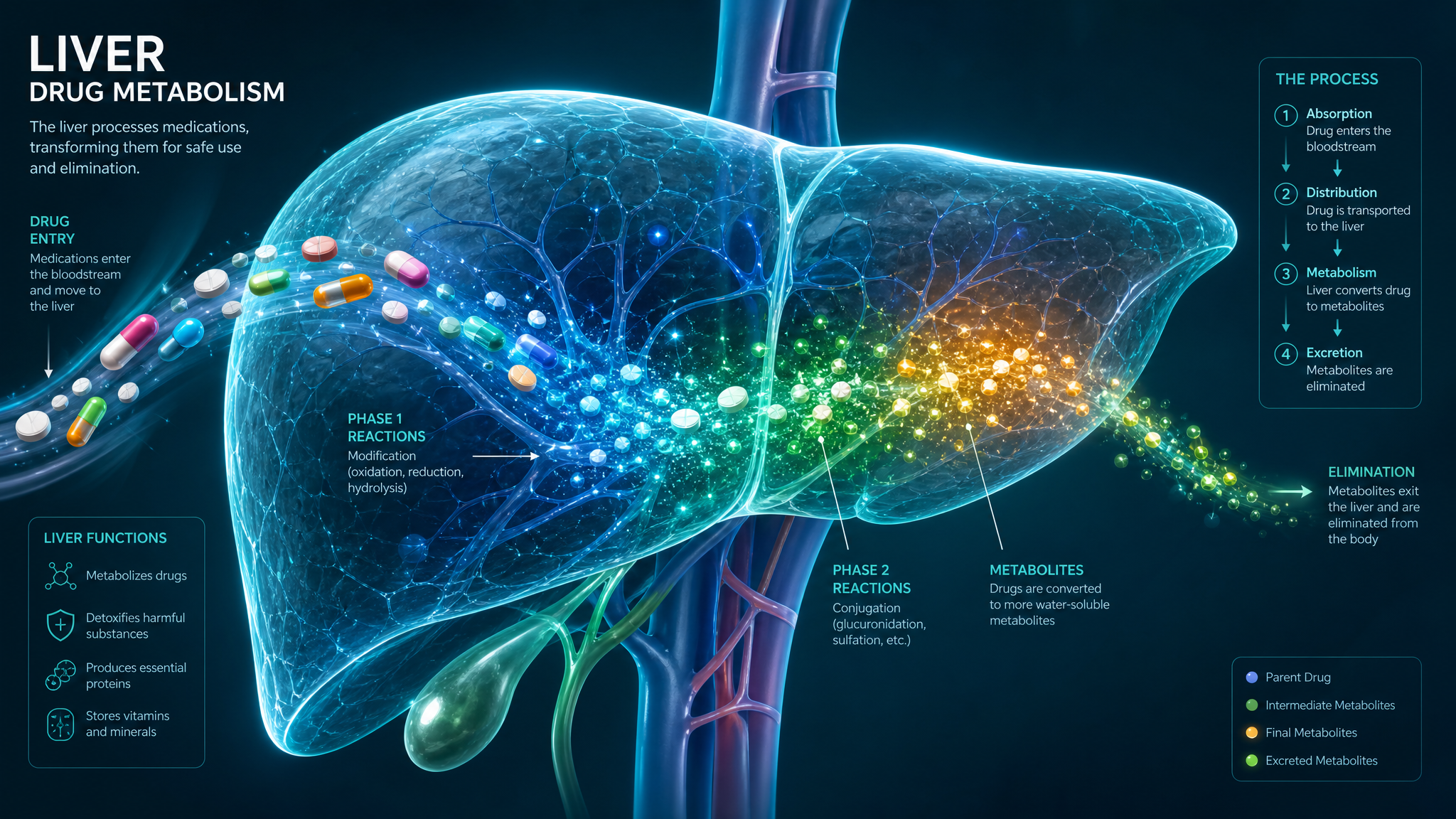
CYP450 Enzyme Drug Interactions: How Your Liver Determines Whether Your Medications Are Safe
Medical Disclaimer: This article is for informational purposes only and does not constitute medical advice. Always consult with a qualified healthcare provider before making changes to your medications, supplements, or health regimen.
When two medications interact dangerously, most people assume it's a simple chemical clash. The reality is far more nuanced — and far more personal. The cytochrome P450 (CYP450) enzyme system in your liver is the hidden gatekeeper of drug metabolism, and understanding how it works could literally save your life.
What Is the CYP450 Enzyme System?
The cytochrome P450 (CYP450) system is a family of over 50 enzymes found primarily in the liver, though also present in the intestines, lungs, and kidneys. These enzymes are responsible for metabolizing approximately 60–80% of all clinically used drugs, according to the [National Institutes of Health](https://www.ncbi.nlm.nih.gov/books/NBK459282/).
The most clinically significant CYP450 enzymes include:
- CYP3A4 — metabolizes ~50% of all drugs (statins, benzodiazepines, many antibiotics)
- CYP2D6 — processes antidepressants, opioids, beta-blockers
- CYP2C9 — handles warfarin, NSAIDs, some diabetes medications
- CYP2C19 — metabolizes proton pump inhibitors, clopidogrel, some antidepressants
- CYP1A2 — processes caffeine, theophylline, some antipsychotics
- Fluconazole (antifungal)
- Clarithromycin (antibiotic)
- Grapefruit juice (yes, really — more on this below)
- Ritonavir (HIV medication)
- Diltiazem (calcium channel blocker)
- Rifampin (antibiotic)
- Carbamazepine (anticonvulsant)
- St. John's Wort (herbal supplement)
- Phenytoin (anticonvulsant)
- Dexamethasone (corticosteroid)
- Atorvastatin and simvastatin (cholesterol medications)
- Amlodipine and felodipine (blood pressure medications)
- Cyclosporine (immunosuppressant)
- Buspirone (anxiety medication)
- Some HIV antiretrovirals
- Poor Metabolizers (PM): Enzyme is largely non-functional; drugs accumulate to toxic levels
- Intermediate Metabolizers (IM): Reduced enzyme activity; moderate drug accumulation
- Normal/Extensive Metabolizers (EM): Standard drug metabolism
- Ultra-Rapid Metabolizers (UM): Enzyme is overactive; drugs are cleared too quickly for therapeutic effect
- Warfarin + Fluconazole: Fluconazole inhibits CYP2C9, causing warfarin levels to rise and dramatically increasing bleeding risk
- Clopidogrel + Omeprazole: Omeprazole inhibits CYP2C19, reducing activation of clopidogrel (a prodrug), potentially increasing heart attack risk in patients on antiplatelet therapy
- Simvastatin + Amiodarone: Amiodarone inhibits CYP3A4, raising simvastatin levels and increasing myopathy risk
- Methadone + Rifampin: Rifampin induces CYP3A4, dramatically reducing methadone levels and risking opioid withdrawal
- Tacrolimus + Azole Antifungals: Can cause tacrolimus toxicity in transplant patients
When a drug is metabolized by a CYP450 enzyme, it is typically converted into an inactive form that can be excreted. However, some drugs are prodrugs — they require CYP450 activation to become therapeutically effective.
Inhibitors vs. Inducers: The Two Types of CYP450 Drug Interactions
Drug-drug interactions via CYP450 fall into two broad categories:
CYP450 Inhibitors
Inhibitors slow down or block a CYP450 enzyme, causing other drugs metabolized by that enzyme to accumulate to potentially toxic levels.
Common CYP3A4 inhibitors include:
Real-world example: Taking clarithromycin with simvastatin (a statin metabolized by CYP3A4) can cause simvastatin levels to spike dramatically, increasing the risk of rhabdomyolysis — a dangerous breakdown of muscle tissue. The [FDA has issued specific warnings](https://pmhealthnp.com/wp-content/uploads/2019/12/cyp-inducers-inhibitors.jpg) about this combination.
CYP450 Inducers
Inducers speed up CYP450 enzyme activity, causing drugs to be metabolized too quickly — leading to subtherapeutic levels and treatment failure.
Common CYP3A4 inducers include:
Real-world example: St. John's Wort is a potent CYP3A4 inducer. When taken alongside oral contraceptives, it can reduce hormone levels enough to cause contraceptive failure. The [WHO has flagged this interaction](https://www.who.int/medicines/publications/pharmacovigilance/en/) as a significant public health concern.
The Grapefruit Effect: A Surprising CYP450 Inhibitor
One of the most well-documented — and frequently overlooked — CYP450 interactions involves grapefruit juice. Compounds called furanocoumarins in grapefruit irreversibly inhibit intestinal CYP3A4, meaning even a single glass can affect drug metabolism for up to 24 hours.
Drugs significantly affected by grapefruit include:
A [landmark study published in the Canadian Medical Association Journal](https://www.cmaj.ca/content/184/4/407) identified over 85 drugs that interact with grapefruit, with 43 capable of causing serious adverse effects.
Pharmacogenomics: Why Your Genetics Change Everything
Here's where CYP450 interactions become deeply personal. Genetic variants in CYP450 genes mean that individuals metabolize drugs at dramatically different rates. Pharmacogenomic testing classifies people into four metabolizer phenotypes:
CYP2D6 and Codeine: A Life-or-Death Example
Codeine is a prodrug that must be converted to morphine by CYP2D6 to provide pain relief. In ultra-rapid metabolizers, this conversion happens so fast that dangerous morphine levels can accumulate. The FDA issued a [black box warning](https://www.fda.gov/drugs/drug-safety-and-availability/fda-drug-safety-communication-fda-restricts-use-prescription-codeine-pain-and-cough-medicines-and) restricting codeine use in children and nursing mothers after deaths were linked to CYP2D6 ultra-rapid metabolism.
Conversely, poor metabolizers of CYP2D6 receive no pain relief from codeine at all — the drug simply cannot be activated.
High-Risk Drug Combinations to Discuss With Your Doctor
The following combinations carry significant CYP450-mediated interaction risks:
How to Protect Yourself
1. Maintain a Complete Medication List
Always provide your healthcare provider and pharmacist with a full list of all medications, supplements, and herbal products you take. Many CYP450 interactions involve supplements like St. John's Wort, garlic, and echinacea.
2. Ask About Pharmacogenomic Testing
If you've had unexpected drug reactions or treatment failures, ask your doctor about pharmacogenomic testing. Tests like GeneSight or Genomind analyze your CYP450 gene variants to predict how you'll metabolize specific medications.
3. Use a Drug Interaction Checker
Before starting any new medication, use a reputable drug interaction checker. The [FDA's drug interaction database](https://www.fda.gov/drugs/drug-interactions-labeling/drug-development-and-drug-interactions-table-substrates-inhibitors-and-inducers) and clinical tools like Lexicomp or Micromedex are gold standards.
4. Be Cautious With Grapefruit and Seville Oranges
If you take any of the 85+ drugs affected by grapefruit, avoid grapefruit juice entirely or discuss timing with your pharmacist.
5. Monitor Lab Values When Starting New Medications
For drugs with narrow therapeutic windows (warfarin, digoxin, lithium, tacrolimus), request lab monitoring when adding or removing any medication that affects CYP450 enzymes.
The Bottom Line
The CYP450 enzyme system is one of the most important — and least understood — factors in medication safety. Drug interactions mediated by CYP450 enzymes can cause toxicity, treatment failure, or life-threatening adverse events. Your genetics, your diet, and every medication or supplement you take all influence how your liver processes drugs.
Understanding these interactions isn't just academic — it's a critical component of safe, effective healthcare. Work with your pharmacist and physician to review your medication list for potential CYP450 interactions, especially when starting new treatments.
---
Take Control of Your Health Data
Ready to cross-reference your medications, supplements, and lab results in one place? [Health Intelligence Analyzer](/) helps you identify potential interactions, flag abnormal lab values, and optimize your health regimen with AI-powered insights. Start your free analysis today.