Drug-Nutrient Depletions: How Common Medications Drain Your Vital Nutrients
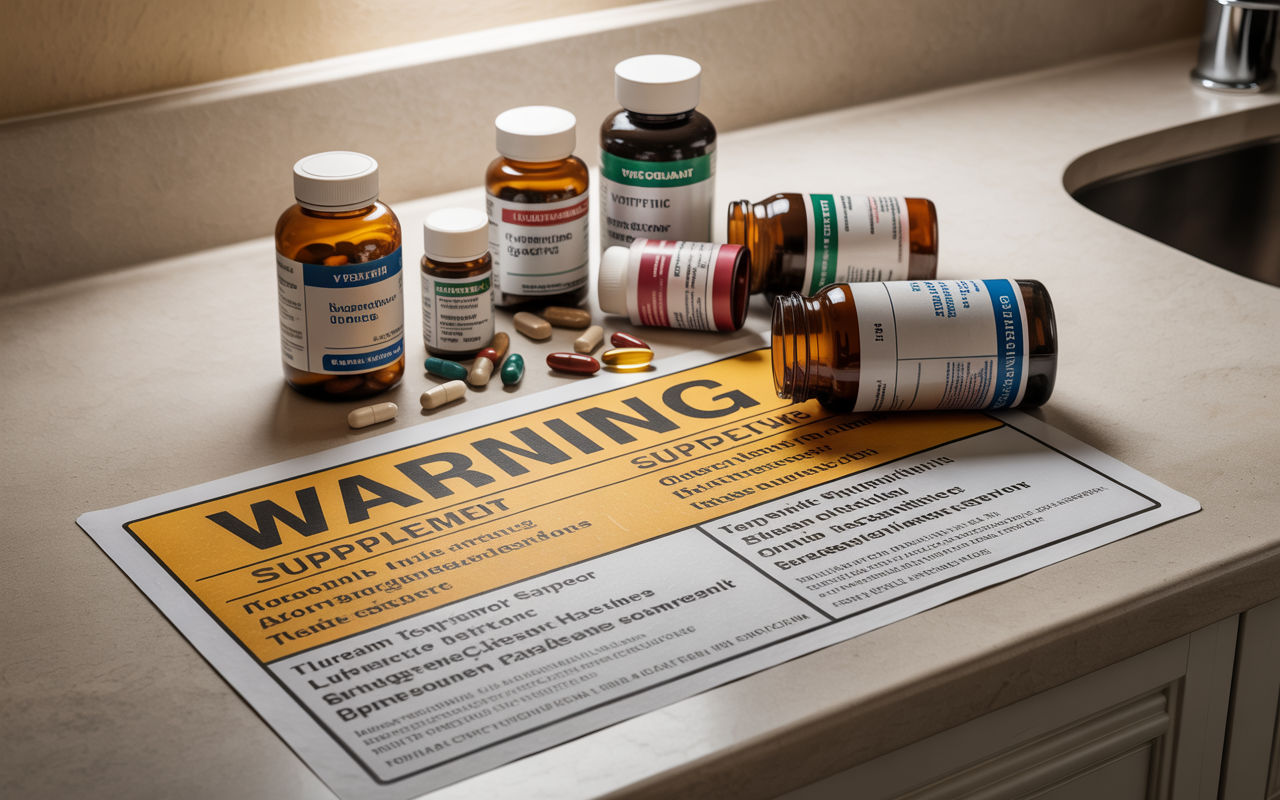
Medical Disclaimer: This article is for informational purposes only and does not constitute medical advice. Always consult with a qualified healthcare provider before making changes to your medications, supplements, or health regimen.
What Are Drug-Nutrient Depletions?
Every time you swallow a prescription pill, your body sets off a cascade of metabolic processes to absorb, distribute, and eliminate that drug. What many patients—and even some clinicians—don't realize is that these processes can consume, block, or accelerate the excretion of critical vitamins and minerals. This phenomenon is known as drug-nutrient depletion.
Drug-nutrient depletions are not rare edge cases. They affect millions of people taking everyday medications for blood pressure, diabetes, acid reflux, and depression. The consequences range from subtle fatigue and brain fog to serious cardiovascular events and nerve damage—all because a medication quietly emptied a nutrient reservoir over months or years.
Why Drug-Nutrient Depletions Go Undetected
The challenge is that depletion is gradual. Your body has reserves of most nutrients, so symptoms may not appear until stores are significantly depleted. By the time a deficiency shows up on a standard lab panel, you may have been running low for a long time.
Additionally, many symptoms of nutrient depletion—fatigue, muscle cramps, mood changes, poor concentration—are easily attributed to the underlying condition being treated, not to the medication itself. This creates a cycle where new symptoms prompt additional prescriptions rather than nutrient repletion.
The Most Common Drug-Nutrient Depletion Pairs
Statins and Coenzyme Q10 (CoQ10)
Statins (atorvastatin, rosuvastatin, simvastatin) are among the most prescribed drugs worldwide. They work by blocking HMG-CoA reductase—the same enzyme your body uses to synthesize both cholesterol and CoQ10. CoQ10 is essential for mitochondrial energy production and is highly concentrated in heart muscle tissue.
Signs of CoQ10 depletion:
- Muscle pain and weakness (myalgia)
- Fatigue and low energy
- Exercise intolerance
- In severe cases, cardiomyopathy
- Peripheral neuropathy (tingling, numbness in hands and feet)
- Fatigue and weakness
- Cognitive decline and memory issues
- Elevated homocysteine on lab work
- Macrocytic anemia (large red blood cells on CBC)
- Magnesium – Low magnesium can cause muscle cramps, arrhythmias, and hypokalemia
- Vitamin B12 – Requires acid for release from food proteins
- Iron – Acid is needed to convert ferric iron to the absorbable ferrous form
- Calcium – Reduced acid impairs calcium carbonate absorption, raising fracture risk
- Zinc – Acid-dependent absorption leads to immune and wound-healing deficits
- Frequent infections
- Slow wound healing
- Loss of taste or smell
- Low testosterone
- Potassium – Hypokalemia causes muscle weakness, cramps, and dangerous cardiac arrhythmias
- Magnesium – Hypomagnesemia worsens potassium depletion and causes neuromuscular symptoms
- Sodium – Hyponatremia can cause confusion, falls, and seizures in the elderly
- Zinc – Increased renal excretion
- Folate (B9) – Critical for DNA synthesis; deficiency raises neural tube defect risk in pregnancy
- B6 (pyridoxine) – Involved in serotonin synthesis; depletion linked to depression and PMS
- B2 (riboflavin) – Energy metabolism and antioxidant function
- B12 – Impaired absorption over time
- At baseline before starting a long-term medication
- At 6–12 months after initiation
- Annually thereafter, or sooner if symptoms develop
Practical takeaway: If you're on a statin and experiencing unexplained muscle aches, ask your doctor about CoQ10 supplementation (typically 100–200 mg/day) and request a CoQ10 blood level if available.
Metformin and Vitamin B12
Metformin is the first-line medication for type 2 diabetes and is taken by hundreds of millions globally. Long-term use impairs B12 absorption in the ileum by interfering with calcium-dependent membrane receptors. Studies show that up to 30% of long-term metformin users develop B12 deficiency.
Signs of B12 depletion:
Practical takeaway: Anyone on metformin for more than one year should have serum B12 checked annually. Methylcobalamin supplementation or periodic B12 injections may be warranted.
Proton Pump Inhibitors (PPIs) and Multiple Nutrients
PPIs (omeprazole, pantoprazole, esomeprazole) reduce stomach acid to treat GERD and ulcers. However, stomach acid is essential for absorbing several key nutrients. Long-term PPI use is associated with depletions of:
Practical takeaway: If you've been on a PPI for more than 6–12 months, ask for a comprehensive metabolic panel plus magnesium, B12, iron studies, and zinc levels.
ACE Inhibitors/ARBs and Zinc
Antihypertensive medications like lisinopril and losartan can increase urinary zinc excretion. Zinc is critical for immune function, wound healing, testosterone production, and taste/smell perception.
Signs of zinc depletion:
Diuretics (Thiazides and Loop Diuretics) and Electrolytes
Thiazide diuretics (hydrochlorothiazide) and loop diuretics (furosemide) are prescribed for hypertension and heart failure. They work by increasing urinary excretion—but they don't discriminate between sodium and vital minerals.
Nutrients depleted:
Practical takeaway: Patients on diuretics should have electrolytes (including magnesium) checked regularly—at minimum every 6 months.
Oral Contraceptives and B Vitamins
Estrogen-containing oral contraceptives deplete several B vitamins, particularly:
Practical takeaway: Women on oral contraceptives should consider a B-complex supplement and ensure adequate folate intake, especially if planning pregnancy.
How to Monitor for Drug-Nutrient Depletions
Key Lab Tests to Request
| Medication | Nutrients to Monitor | Lab Tests |
|---|---|---|
| Statins | CoQ10 | Plasma CoQ10 |
| Metformin | B12 | Serum B12, homocysteine, MMA |
| PPIs | Mg, B12, Fe, Ca, Zn | CMP, magnesium, B12, iron panel |
| Diuretics | K, Mg, Na, Zn | BMP or CMP, magnesium |
| OCP | Folate, B6, B12 | RBC folate, B12, homocysteine |
Timing Matters
Nutrient levels should ideally be checked:
Practical Steps to Protect Yourself
1. Build a complete medication-supplement list — include all prescriptions, OTCs, and supplements
2. Ask your pharmacist about known nutrient depletions for each of your medications
3. Request targeted lab work based on your medication profile
4. Don't self-supplement blindly — some nutrients interact with medications (e.g., high-dose calcium can interfere with certain antibiotics and thyroid medications)
5. Track symptoms — keep a log of new symptoms that emerge after starting or changing medications
The Bottom Line
Drug-nutrient depletions are a silent but significant consequence of long-term medication use. By understanding which medications deplete which nutrients, you can work proactively with your healthcare provider to monitor your levels, replenish deficiencies, and prevent the downstream health consequences that often go unrecognized.
---
Take Control of Your Health Data
Ready to cross-reference your medications, supplements, and lab results in one place? [Health Intelligence Analyzer](/) helps you identify potential interactions, flag abnormal lab values, and optimize your health regimen with AI-powered insights. Start your free analysis today.