Fat-Soluble Vitamin Toxicity: When Too Much of a Good Thing Becomes Dangerous
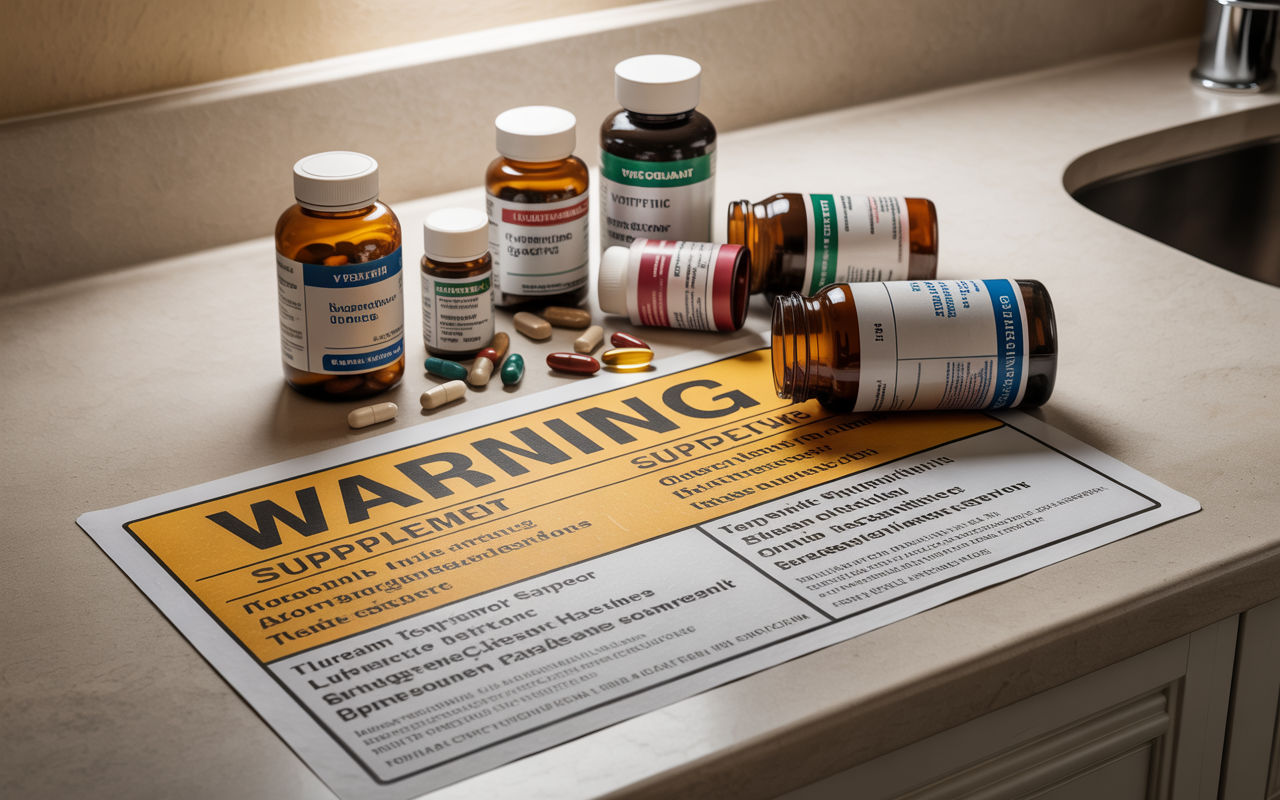
Fat-Soluble Vitamin Toxicity: When Too Much of a Good Thing Becomes Dangerous
Medical Disclaimer: This article is for informational purposes only and does not constitute medical advice. Always consult with a qualified healthcare provider before making changes to your medications, supplements, or health regimen.
Most people know that vitamins are essential for good health — but fewer realize that four of them can quietly accumulate to dangerous levels in the body. Unlike water-soluble vitamins (such as vitamin C and the B vitamins) that are flushed out in urine when taken in excess, fat-soluble vitamins — A, D, E, and K — are stored in fatty tissue and the liver. This storage capacity is a double-edged sword: it provides a reserve during dietary shortfalls, but it also means that chronic over-supplementation can lead to toxicity, sometimes with serious consequences.
With the supplement industry booming and high-dose formulations widely available without a prescription, understanding the risks of fat-soluble vitamin excess has never been more important.
Why Fat-Soluble Vitamins Behave Differently
Water-soluble vitamins have a built-in safety valve: the kidneys filter out what the body doesn't need. Fat-soluble vitamins lack this mechanism. They dissolve in dietary fat, are absorbed through the intestinal lymphatic system, and are deposited in the liver and adipose tissue. Over time — especially with high-dose supplementation — these stores can reach levels that interfere with normal physiology.
The risk is compounded by several factors:
- Fortified foods add to baseline dietary intake
- Multiple supplements may each contain the same vitamin
- Concentrated fish-liver oils (e.g., cod liver oil) are rich in both vitamins A and D
- Certain medical conditions (liver disease, granulomatous disorders) impair normal vitamin metabolism
- Acute: Nausea, vomiting, headache, dizziness, blurred vision (from a single very large dose)
- Chronic: Bone pain, liver damage, hair loss, dry/peeling skin, increased intracranial pressure (pseudotumor cerebri), fatigue
- Pregnancy risk: Doses above 3,000 mcg RAE/day are teratogenic and can cause birth defects
- Nausea, vomiting, weakness, frequent urination
- Kidney stones or kidney damage
- Calcification of soft tissues (blood vessels, kidneys, heart)
- Confusion and cardiac arrhythmias in severe cases
- 25-hydroxyvitamin D [25(OH)D]: Toxicity is generally associated with levels above 150 ng/mL
- Serum calcium: Elevated calcium (>10.5 mg/dL) is a red flag
- Parathyroid hormone (PTH): Suppressed PTH alongside high calcium suggests vitamin D excess
- Anticoagulant effect: High-dose vitamin E inhibits platelet aggregation and can potentiate the effects of blood thinners like warfarin, increasing bleeding risk
- Fatigue, nausea, and gastrointestinal distress
- A landmark meta-analysis published in Annals of Internal Medicine found that high-dose vitamin E supplementation (≥400 IU/day) was associated with increased all-cause mortality ([Miller et al., 2005](https://pubmed.ncbi.nlm.nih.gov/15537682/))
- For vitamin A, prefer beta-carotene in supplements (non-toxic) over high-dose retinol
- For vitamin D, get baseline 25(OH)D tested before supplementing and retest after 3 months
- For vitamin E, opt for mixed tocopherols at moderate doses (≤400 IU/day)
- Vitamin D: 25(OH)D and serum calcium
- Vitamin A: Serum retinol (though this doesn't always reflect liver stores)
- Vitamin E: Plasma alpha-tocopherol
- Take anticoagulants (warfarin, apixaban) — vitamins E and K interact directly
- Have liver disease — impaired metabolism increases toxicity risk
- Are pregnant — vitamin A excess is a known teratogen
- Take multiple supplements or fortified meal replacements
- Fat-soluble vitamins (A, D, E, K) accumulate in the body and can reach toxic levels with chronic over-supplementation
- Vitamin D toxicity is the most commonly reported, driven by widespread high-dose supplementation
- Vitamin A excess poses serious risks in pregnancy and with liver disease
- High-dose vitamin E may increase bleeding risk and all-cause mortality
- Vitamin K interacts critically with anticoagulant medications
- Lab monitoring and total intake audits are the safest approach to supplementation
Vitamin A Toxicity (Hypervitaminosis A)
Vitamin A exists in two main dietary forms: preformed vitamin A (retinol, found in animal products and supplements) and provitamin A carotenoids (beta-carotene, found in plants). Only preformed vitamin A poses a significant toxicity risk — the body regulates conversion of beta-carotene to retinol.
Safe Upper Limit
The National Institutes of Health (NIH) sets the Tolerable Upper Intake Level (UL) for preformed vitamin A at 3,000 mcg RAE (10,000 IU) per day for adults ([NIH Office of Dietary Supplements](https://ods.od.nih.gov/factsheets/VitaminA-HealthProfessional/)).
Signs of Toxicity
Vitamin D Toxicity (Hypervitaminosis D)
Vitamin D has received enormous attention for its role in immune function, bone health, and mood regulation — and with it, a surge in high-dose supplementation. While deficiency is common, toxicity from over-supplementation is increasingly reported in clinical settings.
Safe Upper Limit
The NIH UL for vitamin D is 100 mcg (4,000 IU) per day for adults, though many clinicians use higher doses therapeutically under supervision ([NIH ODS Vitamin D](https://ods.od.nih.gov/factsheets/VitaminD-HealthProfessional/)).
Signs of Toxicity
Vitamin D toxicity primarily causes hypercalcemia (elevated blood calcium), which can produce:
Lab Markers to Watch
Vitamin E Toxicity
Vitamin E (tocopherol) is a potent antioxidant, and many people supplement it hoping to reduce oxidative stress. However, high-dose supplementation carries underappreciated risks.
Safe Upper Limit
The UL for vitamin E is 1,000 mg (approximately 1,500 IU of natural vitamin E) per day for adults.
Signs of Toxicity
Vitamin K Toxicity
Vitamin K is essential for blood clotting and bone metabolism. It exists in two main forms: K1 (phylloquinone, from plants) and K2 (menaquinone, from fermented foods and animal products). Toxicity from food sources is essentially unheard of, but synthetic vitamin K3 (menadione) — no longer used in human supplements — was associated with toxicity.
Safe Upper Limit
No formal UL has been established for vitamins K1 or K2 due to low toxicity potential. However, vitamin K significantly interacts with warfarin (Coumadin) — even modest changes in vitamin K intake can destabilize anticoagulation therapy.
Practical Supplement Safety Strategies
1. Audit Your Total Intake
Add up vitamin content from all sources: multivitamins, individual supplements, fortified foods, and therapeutic doses prescribed by a provider. Many people unknowingly exceed ULs by stacking products.
2. Choose the Right Form
3. Monitor with Lab Work
Regular blood tests can catch early signs of toxicity:
4. Be Extra Cautious If You:
5. Follow Evidence-Based Dosing
The FDA does not require pre-market approval for supplements. Rely on guidance from the NIH Office of Dietary Supplements, the FDA, and peer-reviewed literature rather than marketing claims when choosing doses.
Key Takeaways
Supplements can be powerful tools for health optimization — but fat-soluble vitamins demand respect. More is not always better, and in some cases, more can be genuinely harmful.
---
Take Control of Your Health Data
Ready to cross-reference your medications, supplements, and lab results in one place? [Health Intelligence Analyzer](/) helps you identify potential interactions, flag abnormal lab values, and optimize your health regimen with AI-powered insights. Start your free analysis today.