Medication Timing Matters: How Chronopharmacology Can Maximize Drug Efficacy and Minimize Side Effects
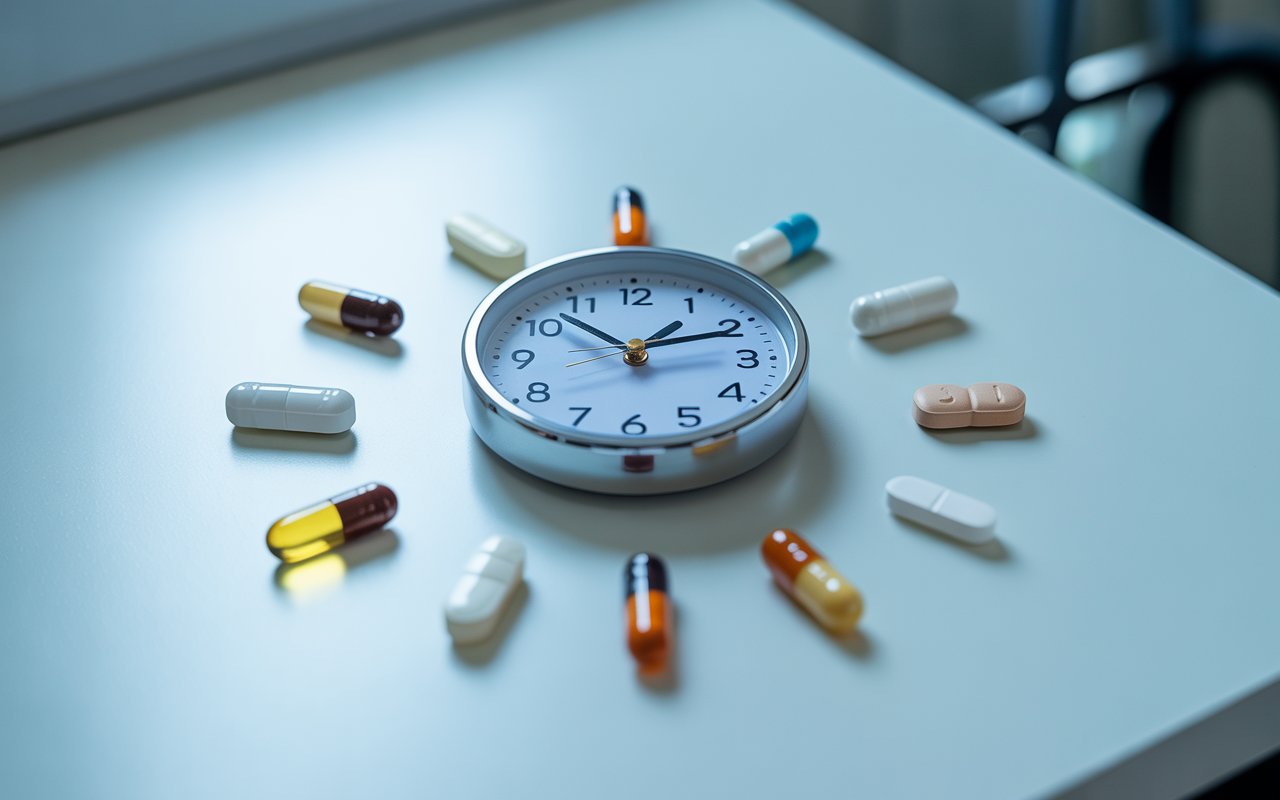
Medication Timing Matters: How Chronopharmacology Can Maximize Drug Efficacy and Minimize Side Effects
Medical Disclaimer: This article is for informational purposes only and does not constitute medical advice. Always consult with a qualified healthcare provider before making changes to your medications, supplements, or health regimen.
Most people take their medications whenever it's convenient—with breakfast, before bed, or simply when they remember. But emerging science in chronopharmacology reveals that when you take a drug can be just as important as what drug you take. Your body's internal clock, the circadian rhythm, governs everything from hormone secretion to enzyme activity, and these biological rhythms profoundly influence how medications are absorbed, metabolized, and excreted.
Understanding medication timing isn't just an academic exercise—it can mean the difference between a drug working optimally or causing unnecessary side effects.
What Is Chronopharmacology?
Chronopharmacology is the study of how the timing of drug administration interacts with the body's biological rhythms. The human body operates on a roughly 24-hour cycle regulated by the suprachiasmatic nucleus (SCN) in the brain. This master clock coordinates:
- Circadian fluctuations in liver enzyme activity (affecting drug metabolism)
- Variations in gastrointestinal motility (affecting absorption speed)
- Rhythmic changes in kidney filtration rates (affecting drug clearance)
- Hormonal cycles that alter receptor sensitivity throughout the day
- ACE inhibitors and ARBs: Often more effective at bedtime
- Diuretics (water pills): Best taken in the morning to avoid nighttime urination disrupting sleep
- Beta-blockers: Timing depends on the specific indication; discuss with your provider
- Reduces suppression of the body's own cortisol production
- Minimizes insomnia (a common side effect of evening dosing)
- Decreases risk of adrenal insufficiency with long-term use
- Insomnia: Stimulating medications (certain antidepressants, corticosteroids, decongestants) taken too late in the day
- Daytime drowsiness: Sedating antihistamines or sleep aids taken too early
- GI upset: Medications taken on an empty stomach that require food
- Hypoglycemia: Insulin or sulfonylureas mistimed relative to meals
- Fasting lipid panels: If LDL remains elevated despite statin therapy, ask your provider whether switching to evening dosing (for short-acting statins) might help
- Morning fasting glucose and HbA1c: Persistently elevated fasting glucose may indicate a need to adjust the timing of diabetes medications
- TSH levels: Suboptimal TSH despite adequate levothyroxine dose may suggest absorption issues related to timing
- Blood pressure logs: Home BP monitoring at different times of day can reveal whether your antihypertensive regimen is covering the high-risk morning surge
- Chronopharmacology shows that medication timing significantly impacts efficacy and side effects
- Statins: Short-acting versions work best at night; long-acting versions are flexible
- Antihypertensives: Bedtime dosing of at least one agent may reduce cardiovascular risk
- Corticosteroids: Morning dosing mimics natural cortisol rhythm and reduces side effects
- Levothyroxine: Consistent timing (morning or bedtime) is critical for stable absorption
- Lab results can serve as objective feedback on whether your medication timing is working
According to research published in Nature Reviews Drug Discovery, chronopharmacological approaches can improve therapeutic outcomes by 20-50% for certain drug classes while simultaneously reducing toxicity (https://www.nature.com/articles/nrd.2016.229).
Key Medications Where Timing Makes a Significant Difference
Statins (Cholesterol-Lowering Drugs)
The liver produces the most cholesterol at night, which is why short-acting statins like simvastatin and lovastatin are most effective when taken in the evening. Studies show evening dosing can reduce LDL cholesterol by an additional 10-15% compared to morning dosing.
However, long-acting statins like atorvastatin and rosuvastatin are effective regardless of timing due to their extended half-lives. If you experience muscle aches (myalgia) with evening statins, discuss morning dosing with your provider—the trade-off in efficacy may be worth the improved tolerability.
Blood Pressure Medications (Antihypertensives)
Blood pressure follows a predictable daily pattern: it dips during sleep and surges in the early morning hours—a phenomenon associated with increased risk of heart attack and stroke. Research from the MAPEC study, published in Chronobiology International, found that taking at least one antihypertensive at bedtime reduced cardiovascular events by 45% compared to taking all doses in the morning (https://pubmed.ncbi.nlm.nih.gov/20653648/).
Key considerations:
Aspirin for Cardiovascular Prevention
Low-dose aspirin is commonly used to prevent heart attacks and strokes. Because platelet aggregation (clotting activity) peaks in the morning, evening aspirin may provide better protection against morning cardiovascular events. A meta-analysis in the Journal of the American College of Cardiology supports bedtime aspirin for improved antiplatelet effect during the high-risk morning hours.
Corticosteroids (Prednisone, Methylprednisolone)
The adrenal glands naturally release cortisol in a burst around 6-8 AM. Taking corticosteroids in the morning with food mimics this natural rhythm, which:
The FDA and most clinical guidelines recommend morning dosing for oral corticosteroids unless otherwise directed (https://www.fda.gov).
Thyroid Medications (Levothyroxine)
Levothyroxine absorption is highly sensitive to food, coffee, and other medications. The standard recommendation is to take it 30-60 minutes before breakfast on an empty stomach. However, research published in Thyroid journal found that bedtime dosing (at least 4 hours after the last meal) may actually improve TSH normalization and T4 levels in some patients, likely due to reduced interference from food and supplements.
Metformin for Type 2 Diabetes
Metformin is typically taken with meals to reduce gastrointestinal side effects. Taking it with the largest meal of the day (often dinner for many people) may improve glucose control overnight and reduce fasting blood sugar levels in the morning—a time when insulin resistance tends to be highest.
Practical Strategies for Optimizing Medication Timing
Build a Medication Schedule Around Your Circadian Rhythm
1. List all your medications and their recommended timing from the prescribing information
2. Identify any timing conflicts (e.g., two medications that both require an empty stomach)
3. Discuss bedtime vs. morning dosing with your pharmacist or physician for antihypertensives and statins
4. Use a pill organizer with AM/PM compartments to avoid confusion
Watch for Timing-Related Side Effects
Some side effects are directly linked to when a medication is taken:
The Role of Lab Monitoring in Medication Timing
Lab results can help confirm whether your medication timing is optimized:
Special Populations and Timing Considerations
Shift Workers
Shift workers have disrupted circadian rhythms, which complicates standard timing recommendations. If you work nights, your biological clock is shifted relative to a day worker's. Discuss personalized timing strategies with your healthcare provider, as standard guidelines may not apply.
Older Adults
Aging alters circadian rhythm amplitude and can change drug metabolism rates. Older adults may experience more pronounced timing-related effects and should be especially attentive to medication schedules.
Patients on Multiple Medications
If you take five or more medications (polypharmacy), timing optimization becomes both more important and more complex. A clinical pharmacist can perform a medication therapy management (MTM) review to create an optimized, personalized schedule.
Key Takeaways
Always consult your healthcare provider or pharmacist before changing when you take any prescription medication. Small timing adjustments, made under medical supervision, can yield meaningful improvements in both safety and effectiveness.
---
Take Control of Your Health Data
Ready to cross-reference your medications, supplements, and lab results in one place? [Health Intelligence Analyzer](/) helps you identify potential interactions, flag abnormal lab values, and optimize your health regimen with AI-powered insights. Start your free analysis today.