Peptide Therapy: What the Emerging Science Says About BPC-157, Sermorelin, and Healing
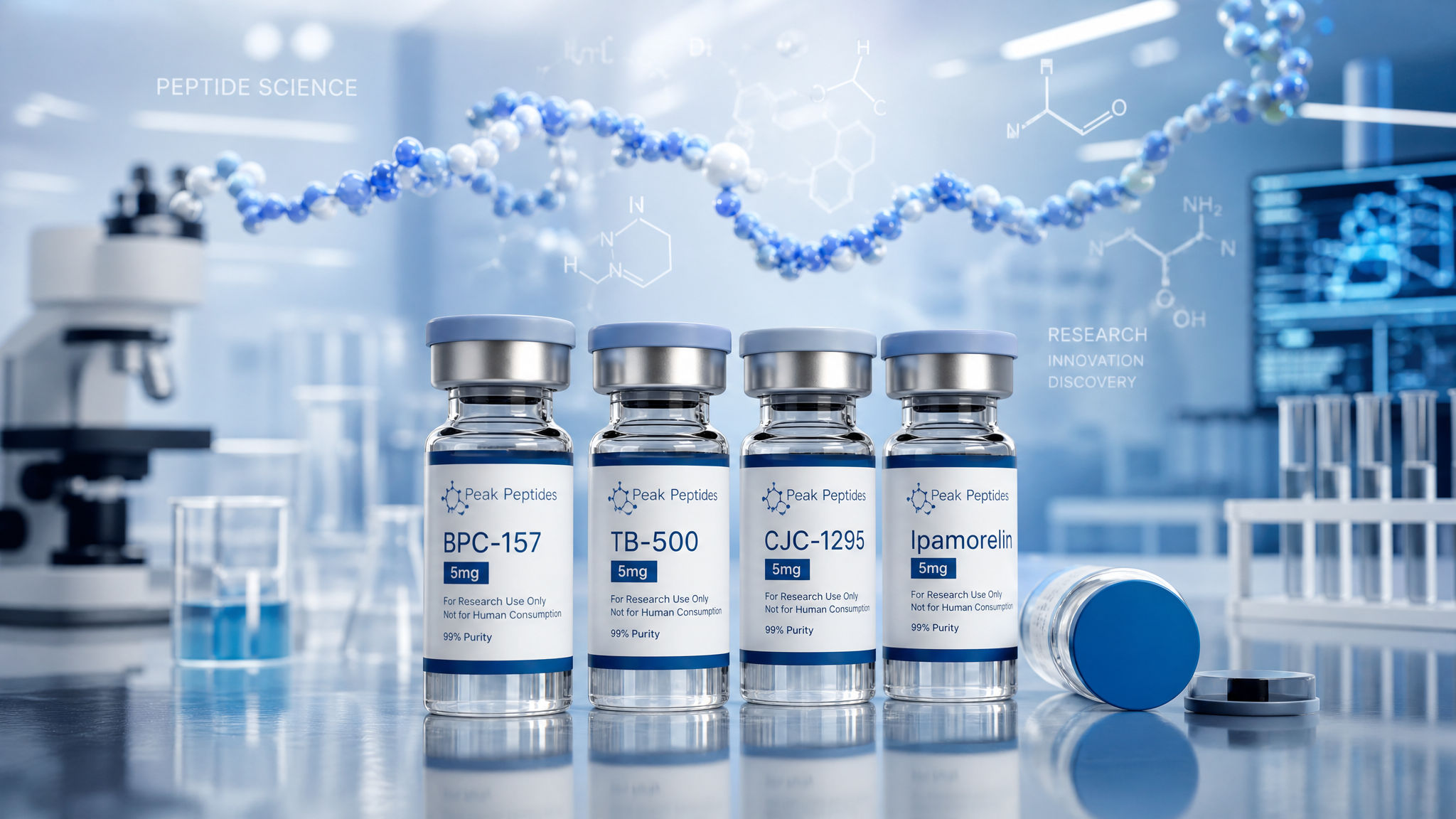
Medical Disclaimer: This article is for informational purposes only and does not constitute medical advice. Always consult with a qualified healthcare provider before making changes to your medications, supplements, or health regimen.
Peptide Therapy: What the Emerging Science Says About BPC-157, Sermorelin, and Healing
Peptide therapies have moved from the fringes of sports medicine into mainstream clinical conversations. Compounds like BPC-157, Sermorelin, and TB-500 are being explored for everything from accelerating tissue repair to optimizing growth hormone secretion. But what does the science actually say—and what should you know before considering these treatments?
What Are Peptides?
Peptides are short chains of amino acids—the building blocks of proteins—that act as biological signaling molecules. Unlike full proteins, their small size allows them to interact with specific receptors and pathways with high precision. The human body naturally produces thousands of peptides that regulate hormones, immune responses, inflammation, and cellular repair.
Therapeutic peptides are either identical to naturally occurring sequences or are synthetic analogs designed to mimic or enhance specific biological functions. The FDA has approved dozens of peptide-based drugs, including insulin, oxytocin, and several cancer therapies. The emerging peptides discussed here, however, occupy a grayer regulatory space.
BPC-157: The "Body Protection Compound"
BPC-157 (Body Protection Compound-157) is a synthetic peptide derived from a protein found in human gastric juice. It has attracted significant attention for its purported regenerative properties.
What the Research Shows
Animal studies—primarily in rats—have demonstrated that BPC-157 may:
- Accelerate tendon and ligament healing by upregulating growth hormone receptors in tendon fibroblasts ([Sikiric et al., 2018, Current Pharmaceutical Design](https://pubmed.ncbi.nlm.nih.gov/29773025/))
- Reduce gastrointestinal inflammation and promote healing of ulcers and inflammatory bowel lesions
- Exhibit neuroprotective effects, potentially supporting recovery from traumatic brain injury in animal models
- Modulate dopamine and serotonin systems, with implications for mood and addiction research
- Age-related growth hormone decline: Growth hormone secretion naturally decreases with age (a process called somatopause). Sermorelin has been studied as a way to partially restore youthful GH pulsatility.
- Body composition: Some studies suggest improvements in lean muscle mass and reductions in adipose tissue in adults with growth hormone deficiency ([Walker et al., Journal of Clinical Endocrinology & Metabolism](https://pubmed.ncbi.nlm.nih.gov/))
- Sleep quality: Growth hormone is predominantly secreted during slow-wave sleep; Sermorelin may support deeper, more restorative sleep cycles.
- Promotes angiogenesis (new blood vessel formation), which is critical for tissue repair
- Reduces inflammation in cardiac tissue following injury in animal models ([Goldstein et al., Annals of the New York Academy of Sciences](https://pubmed.ncbi.nlm.nih.gov/))
- May support recovery from muscle tears and joint injuries
- IGF-1 (Insulin-like Growth Factor 1): The primary downstream marker of growth hormone activity. Elevated IGF-1 is associated with increased cancer risk; monitoring is essential with any GH-stimulating therapy.
- Fasting glucose and HbA1c: Growth hormone can induce insulin resistance; blood sugar monitoring is prudent.
- Comprehensive metabolic panel (CMP): Liver and kidney function should be assessed periodically.
- Inflammatory markers (CRP, ESR): Useful for tracking anti-inflammatory effects of peptides like BPC-157.
- Adults with documented growth hormone deficiency (confirmed by IGF-1 testing and stimulation tests)
- Individuals recovering from significant musculoskeletal injuries under physician supervision
- Patients with refractory gastrointestinal conditions exploring adjunctive options
- Long-term safety data is lacking for most emerging peptides
- Compounding pharmacy quality varies widely—purity and dosing accuracy are not guaranteed without third-party testing
- Drug interactions are poorly characterized; peptides may interact with immunosuppressants, hormonal therapies, and diabetes medications
- Regulatory landscape is shifting—the FDA's increased scrutiny of compounded peptides means availability may change
The Critical Caveat
The overwhelming majority of BPC-157 research is preclinical—conducted in rodents, not humans. As of 2024, there are no completed, peer-reviewed Phase II or Phase III human clinical trials published in major journals. The FDA has not approved BPC-157 for any indication, and in 2022, the FDA issued guidance restricting its use in compounded preparations due to insufficient safety data.
This doesn't mean BPC-157 is ineffective—it means we simply don't yet have the human evidence to make confident clinical recommendations.
Sermorelin: A Growth Hormone Secretagogue
Sermorelin is a synthetic analog of growth hormone-releasing hormone (GHRH). Unlike synthetic human growth hormone (HGH), Sermorelin stimulates the pituitary gland to produce its own growth hormone rather than introducing exogenous HGH directly.
Potential Applications
Regulatory Status
Sermorelin was FDA-approved (as Geref) for pediatric growth hormone deficiency but was voluntarily withdrawn from the market in 2008 for commercial reasons—not safety concerns. It remains available through compounding pharmacies under physician supervision. The FDA's 2023 guidance on compounded peptides has created regulatory uncertainty around its availability.
TB-500 (Thymosin Beta-4): Tissue Repair and Inflammation
Thymosin Beta-4 (Tβ4) is a naturally occurring peptide involved in actin regulation, cell migration, and wound healing. TB-500 is a synthetic fragment of Tβ4.
Emerging Evidence
TB-500 is not FDA-approved and is currently classified as a research chemical. It is banned by the World Anti-Doping Agency (WADA) in competitive sports.
How Peptide Therapy Fits Into a Broader Health Picture
Lab Markers Worth Monitoring
If you are working with a physician who prescribes peptide therapies, certain lab markers can help track efficacy and safety:
Who Might Be a Candidate?
Peptide therapies are most commonly explored by:
They are not appropriate as casual performance enhancers or anti-aging shortcuts without proper medical evaluation.
Risks and Unknowns
The honest assessment of peptide therapy in 2024 includes significant unknowns:
The Bottom Line
Peptide therapies represent a genuinely exciting frontier in regenerative and precision medicine. The mechanistic rationale is sound, and early animal data is promising for several compounds. However, the gap between animal studies and proven human clinical benefit remains wide for most of these agents.
If you're curious about peptide therapy, the most responsible path is:
1. Work with a board-certified physician (endocrinologist, sports medicine specialist, or functional medicine MD) who can order appropriate baseline labs
2. Ensure any compounded peptides come from an FDA-registered, third-party-tested pharmacy
3. Monitor relevant biomarkers before, during, and after treatment
4. Stay informed as the clinical evidence base evolves
---
Take Control of Your Health Data
Ready to cross-reference your medications, supplements, and lab results in one place? [Health Intelligence Analyzer](/) helps you identify potential interactions, flag abnormal lab values, and optimize your health regimen with AI-powered insights. Start your free analysis today.