Prebiotics Explained: How Feeding Your Gut Bacteria Transforms Your Health and Lab Results
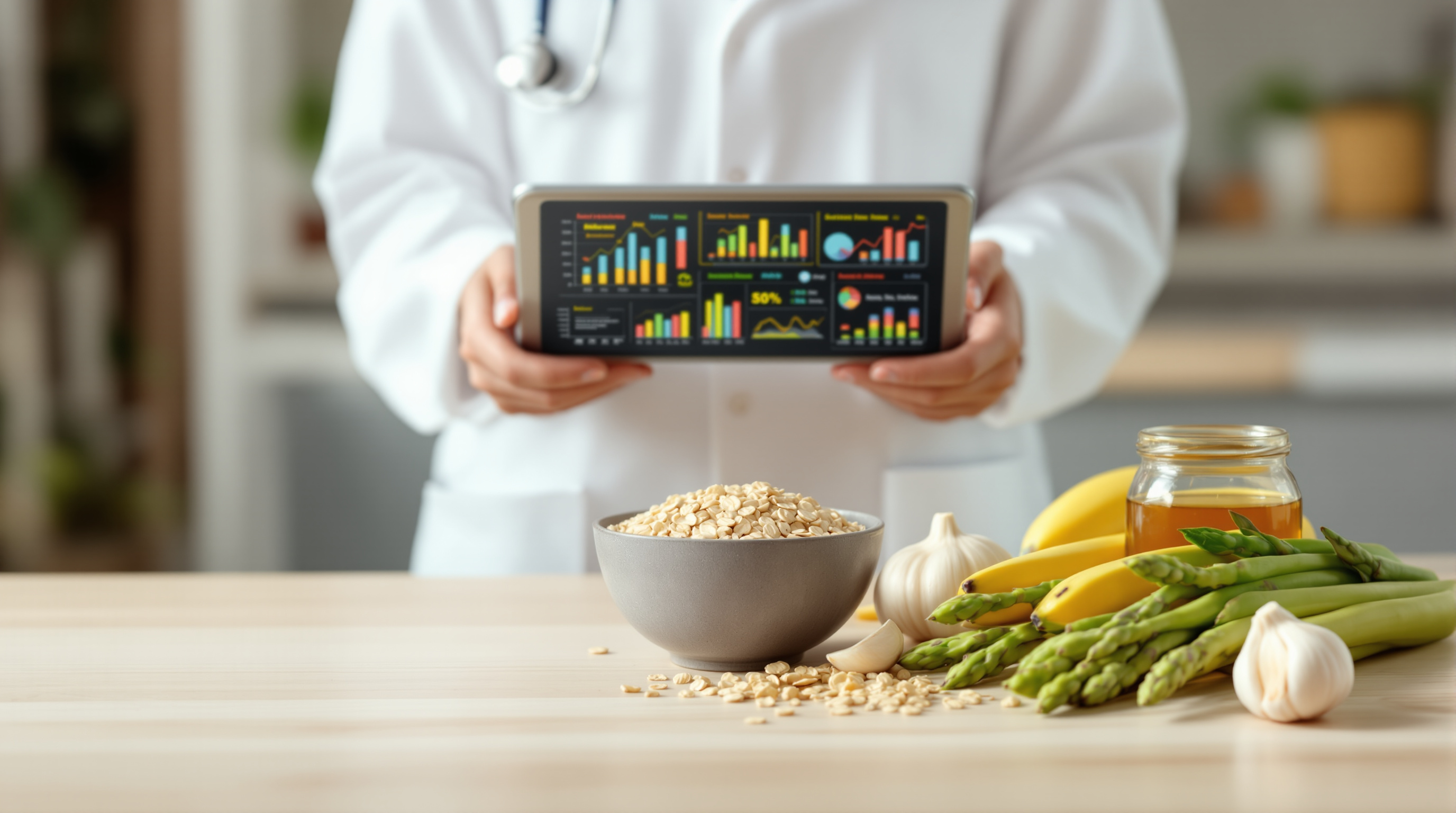
Prebiotics Explained: How Feeding Your Gut Bacteria Transforms Your Health and Lab Results
Medical Disclaimer: This article is for informational purposes only and does not constitute medical advice. Always consult with a qualified healthcare provider before making changes to your medications, supplements, or health regimen.
You've probably heard about probiotics—the live bacteria found in yogurt and fermented foods. But their lesser-known counterparts, prebiotics, may be even more important for long-term gut health. Prebiotics are specialized plant fibers that act as food for your beneficial gut bacteria, helping them thrive and produce compounds that influence everything from your immune system to your cholesterol levels.
Understanding prebiotics—and how to get more of them—can meaningfully shift your lab results and overall health trajectory.
What Are Prebiotics?
Prebiotics are non-digestible dietary fibers and compounds that selectively stimulate the growth and activity of beneficial microorganisms in the gut. Unlike probiotics (which introduce live bacteria), prebiotics feed the bacteria already living in your colon.
The most well-studied prebiotic fibers include:
- Inulin – found in chicory root, garlic, onions, and leeks
- Fructooligosaccharides (FOS) – present in bananas, asparagus, and Jerusalem artichokes
- Galactooligosaccharides (GOS) – naturally occurring in legumes and some dairy
- Resistant starch – found in cooked-and-cooled potatoes, green bananas, and oats
- Pectin – abundant in apples, citrus peel, and berries
- Slow gastric emptying, blunting post-meal blood sugar spikes
- Improve insulin sensitivity in muscle and liver tissue
- Stimulate GLP-1 secretion, a hormone that regulates appetite and glucose metabolism
- SCFAs produced during fermentation inhibit NF-κB, a master regulator of inflammatory gene expression
- A healthier microbiome produces less lipopolysaccharide (LPS), a bacterial toxin that triggers systemic inflammation when it leaks into the bloodstream
- Increased Bifidobacterium populations are inversely correlated with CRP levels
- Garlic and onions – Rich in inulin and FOS; add raw to salads or cooked into nearly any dish
- Leeks and asparagus – Excellent inulin sources; roast or steam for easy preparation
- Jerusalem artichokes – One of the highest prebiotic concentrations of any food
- Green (unripe) bananas – High in resistant starch; great in smoothies
- Oats – Contain beta-glucan, a prebiotic fiber with strong cholesterol-lowering evidence
- Apples – Pectin-rich; eat with the skin for maximum benefit
- Legumes – Lentils, chickpeas, and black beans provide GOS and resistant starch
- Chicory root – The most concentrated natural source of inulin; often used in coffee substitutes
- Start slowly – Rapidly increasing prebiotic fiber can cause bloating and gas as your microbiome adjusts. Increase intake by 3–5 grams per week.
- Pair with probiotics – Combining prebiotic foods with fermented foods (yogurt, kefir, kimchi) creates a synbiotic effect that amplifies benefits.
- Cook and cool starches – Cooking and then cooling potatoes, rice, or pasta increases their resistant starch content significantly.
- Diversify your sources – Different prebiotic fibers feed different bacterial species. Variety is key to a resilient microbiome.
- Stay hydrated – Fiber absorbs water; adequate hydration prevents constipation as you increase intake.
- Dietary restrictions limit whole food sources
- You're recovering from antibiotic use and need to rapidly rebuild gut flora
- Your lab results show persistent inflammation or dysglycemia despite dietary changes
- HbA1c and fasting glucose – Expect improvement within 8–12 weeks
- Lipid panel (LDL, total cholesterol, triglycerides) – Measurable changes in 6–12 weeks
- hs-CRP – May improve within 4–8 weeks with consistent intake
- Fasting insulin – A sensitive early marker of metabolic improvement
According to the [National Institutes of Health (NIH)](https://www.ncbi.nlm.nih.gov/pmc/articles/PMC6041804/), prebiotic consumption consistently increases populations of Bifidobacterium and Lactobacillus—two bacterial genera strongly associated with reduced inflammation and improved metabolic health.
How Prebiotics Affect Your Lab Results
Blood Sugar and HbA1c
One of the most clinically significant effects of prebiotic fiber is improved glycemic control. When gut bacteria ferment prebiotic fibers, they produce short-chain fatty acids (SCFAs) like butyrate, propionate, and acetate. These SCFAs:
A meta-analysis published in Nutrients found that prebiotic supplementation significantly reduced fasting blood glucose and HbA1c in people with type 2 diabetes or prediabetes. If your HbA1c is trending upward, increasing prebiotic-rich foods may help bring it back into range.
Cholesterol and Lipid Panel
Prebiotics—particularly soluble fibers like pectin and inulin—bind to bile acids in the gut, preventing their reabsorption. The liver must then pull LDL cholesterol from the bloodstream to synthesize new bile acids, effectively lowering circulating LDL.
Research from the [American Journal of Clinical Nutrition](https://academic.oup.com/ajcn) shows that 10–20 grams of inulin-type fructans daily can reduce total cholesterol by 5–10% and LDL by up to 8% in adults with elevated lipids. If your lipid panel shows borderline LDL, dietary prebiotics are a well-supported first-line strategy.
C-Reactive Protein (CRP) and Inflammation
Chronic low-grade inflammation—measured by high-sensitivity CRP (hs-CRP)—is a root driver of cardiovascular disease, metabolic syndrome, and autoimmune conditions. Prebiotic fibers reduce systemic inflammation through multiple pathways:
If your hs-CRP is above 1.0 mg/L, boosting prebiotic intake is one of the most evidence-backed dietary interventions available.
Triglycerides
Elevated triglycerides often reflect excess refined carbohydrate intake and poor gut health. Prebiotic fibers help by reducing hepatic fat synthesis and improving insulin sensitivity—both of which lower triglyceride production. Studies show that inulin supplementation can reduce fasting triglycerides by 10–15% over 8–12 weeks.
Top Prebiotic Foods to Add to Your Diet
You don't need supplements to get meaningful prebiotic intake. Whole foods are the most effective and bioavailable source:
Aim for 25–38 grams of total dietary fiber daily, with at least 5–10 grams coming from prebiotic-specific sources.
Practical Tips for Increasing Prebiotic Intake
When to Consider Prebiotic Supplements
For most people, food-first is the best approach. However, prebiotic supplements (inulin powder, FOS, or psyllium husk) may be appropriate if:
Always discuss supplementation with your healthcare provider, especially if you have irritable bowel syndrome (IBS), as high-dose prebiotics can worsen symptoms in some individuals with gut motility issues.
Monitoring Your Progress with Lab Work
If you increase prebiotic intake, consider tracking these markers at your next lab draw:
Tracking these values over time gives you objective evidence of whether your dietary changes are working—and helps you and your provider make informed decisions.
---
Take Control of Your Health Data
Ready to cross-reference your medications, supplements, and lab results in one place? [Health Intelligence Analyzer](/) helps you identify potential interactions, flag abnormal lab values, and optimize your health regimen with AI-powered insights. Start your free analysis today.