Resistant Starch: The Gut-Healing Carb That Improves Blood Sugar and Feeds Your Microbiome
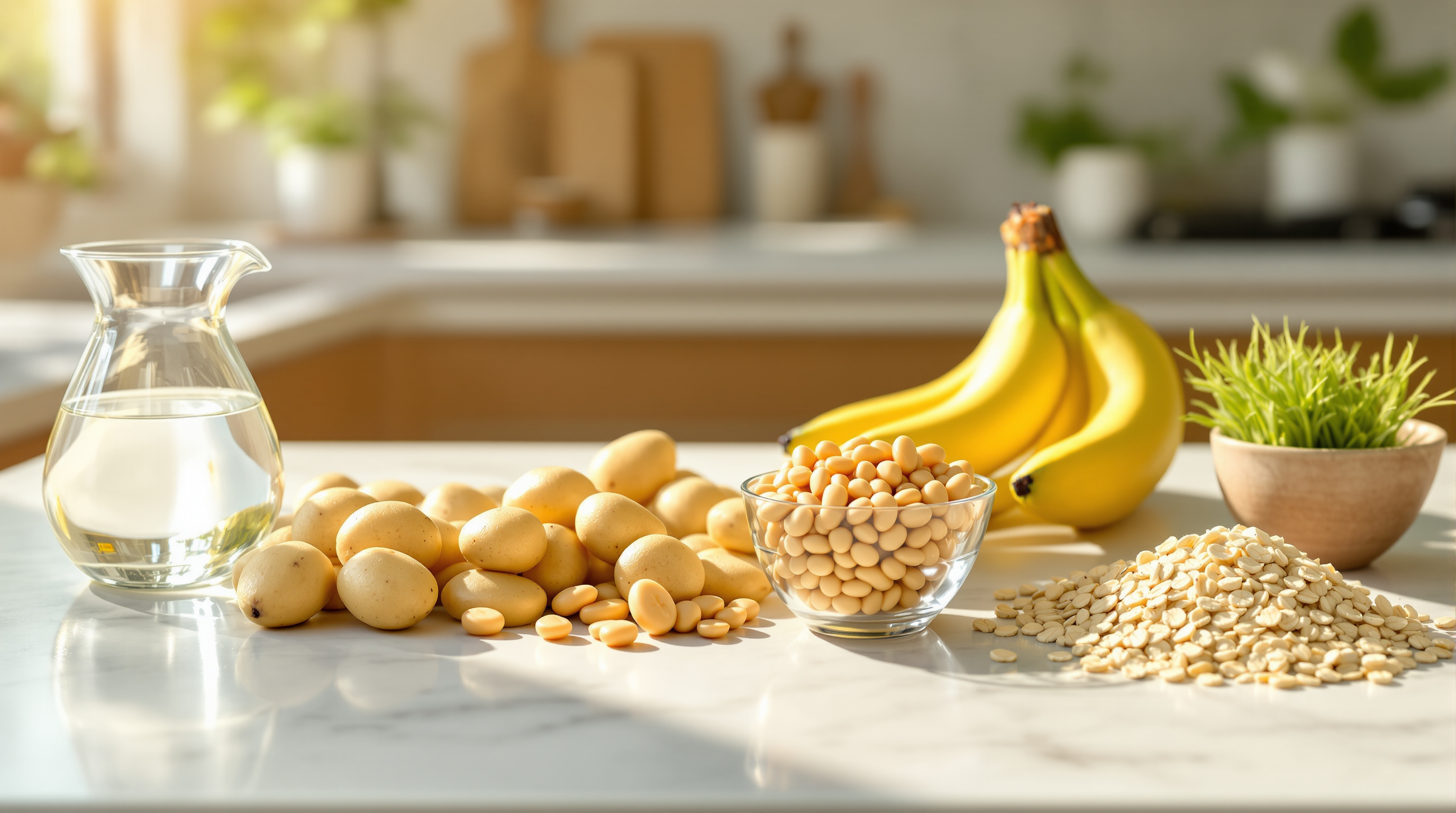
Resistant Starch: The Gut-Healing Carb That Improves Blood Sugar and Feeds Your Microbiome
Medical Disclaimer: This article is for informational purposes only and does not constitute medical advice. Always consult with a qualified healthcare provider before making changes to your medications, supplements, or health regimen.
Not all carbohydrates behave the same way in your body. While most starches are rapidly broken down into glucose and absorbed in the small intestine, resistant starch takes a different path — it resists digestion, travels intact to the colon, and becomes fuel for your beneficial gut bacteria. The downstream effects on blood sugar, insulin sensitivity, inflammation, and metabolic lab markers are substantial and increasingly well-documented.
Understanding resistant starch is one of the most practical nutrition science insights you can apply to your daily diet — without eliminating entire food groups or following a restrictive protocol.
What Is Resistant Starch?
Resistant starch (RS) is a type of dietary fiber that is not digested by human enzymes in the small intestine. Instead, it ferments in the large intestine, where it acts as a prebiotic — selectively feeding beneficial bacteria such as Bifidobacterium and Lactobacillus species.
Researchers classify resistant starch into four main types:
- Type 1 (RS1): Physically inaccessible starch trapped in intact cell walls — found in whole grains, seeds, and legumes
- Type 2 (RS2): Raw starch granules with a crystalline structure — found in raw potatoes, green (unripe) bananas, and high-amylose corn
- Type 3 (RS3): Retrograded starch formed when cooked starchy foods are cooled — found in cooked-then-cooled rice, potatoes, and pasta
- Type 4 (RS4): Chemically modified starch used in processed foods
- Green (unripe) bananas — approximately 4–6 g RS per medium banana
- Cooked-then-cooled potatoes — cooling converts digestible starch to RS3; reheating at low temperatures preserves much of it
- Cooked-then-cooled rice — a staple in many Asian diets; cooling overnight significantly increases RS content
- Legumes — lentils, chickpeas, black beans, and kidney beans are excellent sources of RS1
- Oats (raw or minimally cooked) — overnight oats retain more RS than fully cooked oatmeal
- High-amylose corn — available as a supplement (Hi-Maize) or in specialty products
- Cooked-then-cooled pasta — al dente pasta that is cooled has a lower glycemic index than freshly cooked
- Plantains — particularly when green and less ripe
- Meal prep your starches: Cook rice, potatoes, or pasta in advance and refrigerate overnight before eating. This simple step meaningfully increases RS3 content.
- Eat your oats cold: Overnight oats prepared with milk or yogurt and refrigerated retain more resistant starch than hot oatmeal.
- Choose less-ripe bananas: A slightly green banana has significantly more RS than a fully ripe yellow one.
- Add legumes to meals: Aim for at least one serving of beans or lentils daily — they provide RS, protein, and soluble fiber simultaneously.
- Start slowly: Rapidly increasing fiber intake can cause gas and bloating as your gut microbiome adapts. Increase RS gradually over 2–3 weeks.
- People with prediabetes or type 2 diabetes seeking to improve blood sugar control
- Those with elevated LDL or triglycerides looking for dietary strategies to improve their lipid panel
- Individuals with gut dysbiosis or inflammatory bowel conditions (under medical supervision)
- Anyone with elevated hsCRP seeking to reduce systemic inflammation through diet
- People on weight management programs — RS increases satiety hormones (GLP-1 and PYY) and reduces appetite
Types 2 and 3 are the most relevant for everyday dietary choices. Notably, cooking and then cooling starchy foods significantly increases their RS3 content — a simple kitchen technique with measurable metabolic benefits.
How Resistant Starch Affects Your Lab Results
Blood Glucose and HbA1c
One of the most clinically significant effects of resistant starch is its impact on postprandial (after-meal) blood glucose. Because RS bypasses small intestinal digestion, it does not trigger the same glucose spike as regular starch.
A meta-analysis published in Nutrients (2019) found that resistant starch supplementation significantly reduced fasting blood glucose and improved insulin sensitivity in adults with metabolic syndrome and type 2 diabetes. Regular consumption may contribute to lower HbA1c over time — a key marker of long-term blood sugar control tracked in standard lab panels.
What to watch on your labs: Fasting glucose, postprandial glucose (if tested), and HbA1c.
Insulin Sensitivity and HOMA-IR
Resistant starch improves insulin sensitivity through multiple mechanisms. Fermentation in the colon produces short-chain fatty acids (SCFAs) — primarily butyrate, propionate, and acetate — which signal to the liver and peripheral tissues to improve glucose uptake and reduce hepatic glucose production.
A randomized controlled trial published in Diabetes Care demonstrated that high-amylose maize resistant starch improved insulin sensitivity (measured by HOMA-IR) in overweight adults after just four weeks of supplementation.
What to watch on your labs: Fasting insulin and HOMA-IR (if your provider orders them).
Lipid Panel
SCFAs produced from RS fermentation — particularly propionate — inhibit hepatic cholesterol synthesis. Studies have shown modest but meaningful reductions in total cholesterol and LDL cholesterol with regular resistant starch intake, without adversely affecting HDL.
A 2020 review in The American Journal of Clinical Nutrition noted that RS supplementation was associated with reductions in total cholesterol of approximately 5–10% in metabolically at-risk populations.
What to watch on your labs: LDL cholesterol, total cholesterol, and triglycerides.
Inflammatory Markers
The gut microbiome changes driven by resistant starch — increased Bifidobacterium, reduced pathogenic bacteria — are associated with lower systemic inflammation. Butyrate, in particular, is a potent anti-inflammatory compound that strengthens the intestinal barrier and reduces translocation of bacterial endotoxins (lipopolysaccharides) into the bloodstream.
Elevated LPS is a driver of low-grade chronic inflammation, which shows up as elevated high-sensitivity CRP (hsCRP) on lab panels. Resistant starch may help lower hsCRP over time by improving gut barrier integrity.
What to watch on your labs: hsCRP and other inflammatory markers.
Best Food Sources of Resistant Starch
You don't need supplements to benefit from resistant starch. These whole foods are among the richest sources:
Practical Tips for Increasing Resistant Starch Intake
Who Benefits Most?
Resistant starch is particularly beneficial for:
What the Research Recommends
The current evidence supports a daily intake of 15–30 grams of total resistant starch for meaningful metabolic benefits, though most Western diets provide only 3–8 grams per day. Closing this gap through whole food sources — rather than supplements — is the preferred approach endorsed by nutrition researchers.
The NIH National Library of Medicine hosts numerous peer-reviewed studies on resistant starch and metabolic health at [PubMed](https://pubmed.ncbi.nlm.nih.gov/?term=resistant+starch+metabolic+health). The FDA recognizes dietary fiber (including RS) as beneficial for reducing the risk of coronary heart disease.
---
Take Control of Your Health Data
Ready to cross-reference your medications, supplements, and lab results in one place? [Health Intelligence Analyzer](/) helps you identify potential interactions, flag abnormal lab values, and optimize your health regimen with AI-powered insights. Start your free analysis today.