Sleep and Cardiovascular Health: How Your Nightly Rest Shapes Your Heart Risk Markers
Medical Disclaimer: This article is for informational purposes only and does not constitute medical advice. Always consult with a qualified healthcare provider before making changes to your medications, supplements, or health regimen.
The Overlooked Link Between Sleep and Heart Health
Most people know that diet and exercise matter for cardiovascular health. Far fewer realize that the hours spent asleep each night are equally powerful—and measurable—drivers of heart disease risk. Research published in the European Heart Journal found that people who sleep fewer than six hours per night have a 20% higher risk of fatal cardiovascular events compared to those sleeping seven to eight hours. Yet sleep remains one of the most underutilized levers in preventive cardiology.
This article breaks down exactly how sleep quality and duration influence your cardiac lab markers, what the science says about the mechanisms involved, and practical steps you can take to protect your heart while you rest.
How Sleep Deprivation Raises Blood Pressure
Blood pressure follows a predictable pattern in healthy individuals: it dips by roughly 10–20% during sleep, a phenomenon called "nocturnal dipping." This nightly dip gives the arterial walls a period of reduced mechanical stress, allowing endothelial repair and reducing long-term cardiovascular wear.
When sleep is cut short or fragmented, this dip is blunted or absent—a pattern called "non-dipping." Non-dippers consistently show:
- Higher 24-hour average blood pressure readings
- Greater left ventricular mass (a marker of cardiac strain)
- Elevated risk of stroke and myocardial infarction independent of daytime blood pressure
- Optimal hs-CRP: < 1.0 mg/L (low cardiovascular risk)
- Elevated hs-CRP: > 3.0 mg/L (high cardiovascular risk)
- Triglycerides tend to rise with chronic sleep restriction, partly due to increased cortisol and impaired hepatic lipid clearance
- HDL cholesterol often decreases in poor sleepers, reducing reverse cholesterol transport
- LDL particle size may shift toward smaller, denser particles—the more atherogenic form—in individuals with disrupted sleep
- Hypertension: OSA is the most common secondary cause of resistant hypertension
- Atrial fibrillation: OSA increases AF risk by 2–4 fold
- Heart failure: Untreated moderate-to-severe OSA doubles the risk of incident heart failure
- Adults: 7–9 hours per night
- Teens: 8–10 hours
- Children: 9–12 hours
- Keep the bedroom cool (65–68°F / 18–20°C)
- Use blackout curtains or a sleep mask to block light
- Minimize noise with earplugs or white noise
- Reserve the bed for sleep and intimacy only
- hs-CRP — should trend downward with improved sleep
- Fasting glucose and insulin — improved sleep reduces insulin resistance
- Lipid panel — watch for rising HDL and falling triglycerides
- Blood pressure — home monitoring captures nocturnal patterns better than office readings
A landmark study in Hypertension (2019) demonstrated that even one week of mild sleep restriction (six hours per night) significantly elevated systolic blood pressure in previously normotensive adults. The mechanism involves heightened sympathetic nervous system activity and suppressed parasympathetic tone during waking hours—your body stays in a low-grade "fight or flight" state.
Key Cardiac Lab Markers Affected by Sleep
C-Reactive Protein (CRP) and Interleukin-6
Poor sleep is a potent driver of systemic inflammation. Studies from the NIH-funded MESA (Multi-Ethnic Study of Atherosclerosis) cohort found that short sleepers had significantly higher levels of high-sensitivity CRP (hs-CRP) and interleukin-6 (IL-6)—two markers strongly associated with atherosclerosis progression and acute coronary events.
If your hs-CRP is persistently elevated without an obvious inflammatory cause, poor sleep quality is a frequently overlooked contributor.
Fasting Glucose and Insulin Resistance
Sleep deprivation impairs glucose metabolism within days. A classic study in The Lancet showed that healthy young adults restricted to four hours of sleep for six nights developed insulin sensitivity comparable to pre-diabetic individuals. Elevated fasting glucose and insulin resistance are independent cardiovascular risk factors, accelerating endothelial dysfunction and plaque formation.
Lipid Panel Changes
The relationship between sleep and lipids is nuanced but clinically meaningful:
Heart Rate Variability (HRV)
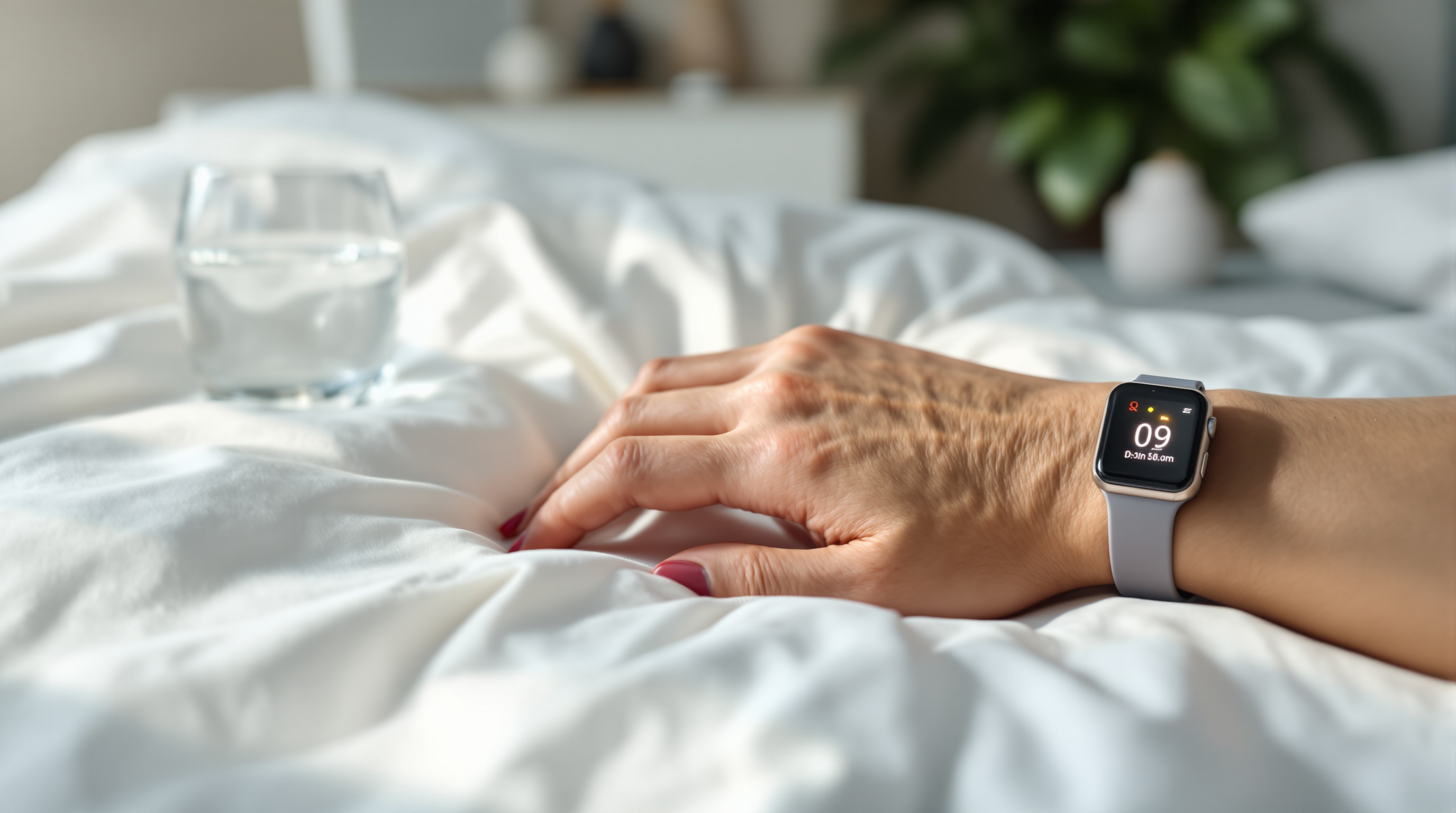
HRV—the beat-to-beat variation in heart rate—is one of the most sensitive markers of autonomic nervous system health and cardiovascular resilience. Poor sleep consistently reduces HRV, reflecting reduced parasympathetic tone. Low HRV is an independent predictor of cardiac mortality and arrhythmia risk. Many wearable devices now track HRV nightly, making this a practical biomarker for monitoring sleep's impact on your heart.
Sleep Apnea: The Silent Cardiac Threat
Obstructive sleep apnea (OSA) deserves special mention. Affecting an estimated 30 million Americans—many undiagnosed—OSA causes repeated oxygen desaturations throughout the night, triggering surges in sympathetic activity, cortisol, and inflammatory cytokines. The cardiovascular consequences are substantial:
If you snore loudly, wake unrefreshed, or have a partner who notices breathing pauses, a sleep study (polysomnography or home sleep test) is warranted. Effective CPAP therapy has been shown to reduce blood pressure by 2–10 mmHg and improve HRV significantly.
Optimal Sleep Duration for Cardiovascular Protection
The American Heart Association's 2022 Life's Essential 8 framework formally added sleep health as a core cardiovascular health metric—the first time sleep was included alongside diet, exercise, and smoking. Their recommendations:
Both short sleep (< 6 hours) and long sleep (> 9 hours) are associated with elevated cardiovascular risk, though the mechanisms differ. Long sleep is often a marker of underlying illness rather than a direct cause.
Practical Strategies to Improve Sleep and Protect Your Heart
Prioritize Sleep Consistency
Going to bed and waking at the same time—even on weekends—anchors your circadian rhythm and promotes deeper, more restorative sleep stages. Irregular sleep timing is independently associated with higher cardiovascular risk.
Optimize Your Sleep Environment
Limit Evening Stimulants and Alcohol
Caffeine has a half-life of 5–7 hours; a 3 PM coffee can still be active at 10 PM. Alcohol, while sedating initially, fragments sleep architecture and suppresses REM sleep—reducing the restorative value of your night.
Screen Time and Blue Light
Blue light from screens suppresses melatonin secretion. Aim to stop screen use 60–90 minutes before bed, or use blue-light-blocking glasses and night mode settings.
Exercise Timing
Regular aerobic exercise improves sleep quality and reduces OSA severity. However, vigorous exercise within 2–3 hours of bedtime can delay sleep onset in some individuals. Morning or afternoon workouts are generally optimal.
Monitoring Your Progress with Lab Work
If you're working to improve your sleep for cardiovascular benefit, consider tracking these markers every 3–6 months:
Sources: [NIH Sleep Research](https://www.nhlbi.nih.gov/health-topics/sleep-deprivation-and-deficiency), [American Heart Association Life's Essential 8](https://www.heart.org/en/healthy-living/healthy-lifestyle/lifes-essential-8), [European Heart Journal 2019](https://academic.oup.com/eurheartj/article/40/20/1620/5298483), [MESA Sleep Study](https://www.ncbi.nlm.nih.gov/pmc/articles/PMC4667388/)
---
Take Control of Your Health Data
Ready to cross-reference your medications, supplements, and lab results in one place? [Health Intelligence Analyzer](/) helps you identify potential interactions, flag abnormal lab values, and optimize your health regimen with AI-powered insights. Start your free analysis today.