Sleep Deprivation and Your Lab Results: How Poor Sleep Disrupts Hormones, Blood Sugar, and Inflammation
Sleep Deprivation and Your Lab Results: How Poor Sleep Disrupts Hormones, Blood Sugar, and Inflammation
Medical Disclaimer: This article is for informational purposes only and does not constitute medical advice. Always consult with a qualified healthcare provider before making changes to your medications, supplements, or health regimen.
Most people know that skimping on sleep leaves them groggy and irritable. But what many don't realize is that chronic sleep deprivation quietly rewrites the numbers on your lab report—elevating inflammatory markers, destabilizing blood sugar, and throwing your hormonal axis into disarray. Understanding the connection between sleep and your biomarkers is one of the most actionable steps you can take for long-term health.
Why Sleep Is a Biological Necessity, Not a Luxury
Sleep is not passive downtime. During the 7–9 hours recommended by the [American Academy of Sleep Medicine](https://aasm.org/), your body performs critical maintenance: consolidating memories, clearing metabolic waste from the brain via the glymphatic system, repairing tissue, and resetting hormonal rhythms. When sleep is cut short—even by 60–90 minutes per night—these processes are interrupted, and the downstream effects show up in your bloodwork.
According to a landmark study published in Sleep (2010), adults sleeping fewer than 6 hours per night had significantly higher levels of inflammatory cytokines compared to those sleeping 7–8 hours ([PMID: 20469800](https://pubmed.ncbi.nlm.nih.gov/20469800/)). The implications extend far beyond fatigue.
Key Lab Markers Affected by Sleep Deprivation
1. Cortisol: The Stress Hormone That Won't Shut Off
Cortisol follows a diurnal rhythm—high in the morning to promote wakefulness, low at night to allow restorative sleep. Sleep deprivation disrupts this cycle, causing cortisol levels to remain elevated in the evening and overnight.
- What to look for: Elevated late-afternoon or evening cortisol on a 4-point salivary cortisol test, or a blunted morning cortisol awakening response.
- Why it matters: Chronically high cortisol promotes visceral fat accumulation, suppresses immune function, and accelerates bone loss. The [NIH National Institute of Mental Health](https://www.nimh.nih.gov/health/topics/anxiety-disorders) notes that HPA axis dysregulation is a core feature of both sleep disorders and mood disorders.
- What to look for: Creeping fasting glucose (above 90 mg/dL trending toward 100 mg/dL), elevated fasting insulin (above 10 µIU/mL), and rising HbA1c.
- Why it matters: Pre-diabetes and type 2 diabetes risk increase substantially with chronic short sleep. The [CDC](https://www.cdc.gov/diabetes/prevention/index.html) identifies poor sleep as a modifiable risk factor for metabolic disease.
- What to look for: hs-CRP above 1.0 mg/L (borderline) or above 3.0 mg/L (high risk) in the absence of acute infection.
- Why it matters: Chronic low-grade inflammation is the common thread linking sleep deprivation to heart disease, cancer, and neurodegenerative conditions. A 2020 meta-analysis in Sleep Medicine Reviews confirmed the dose-response relationship between sleep duration and inflammatory biomarkers ([PMID: 32007653](https://pubmed.ncbi.nlm.nih.gov/32007653/)).
- What to look for: While leptin and ghrelin are not standard lab panels, elevated fasting insulin and weight gain despite controlled caloric intake can be indirect signals.
- Why it matters: This hormonal shift drives increased appetite—particularly for high-calorie, high-carbohydrate foods—making weight management significantly harder for sleep-deprived individuals.
- What to look for: Low total testosterone (below 400 ng/dL in men, below 15 ng/dL in women), low IGF-1 (a proxy for GH activity).
- Why it matters: Low testosterone is associated with reduced muscle mass, increased body fat, low libido, and depression. The [Endocrine Society](https://www.endocrine.org/patient-engagement/endocrine-library/testosterone-deficiency) recommends ruling out sleep disorders before initiating testosterone replacement therapy.
- What to look for: TSH above 2.5 mIU/L in the context of fatigue, weight gain, and cold intolerance—especially if thyroid antibodies are negative.
- Why it matters: Misattributing sleep-induced TSH elevation to true hypothyroidism can lead to unnecessary thyroid hormone prescriptions.
- Temperature: Keep your bedroom between 65–68°F (18–20°C). Core body temperature must drop 1–2°F to initiate sleep.
- Darkness: Use blackout curtains or a sleep mask. Even small amounts of light suppress melatonin production.
- Noise: White noise machines or earplugs can reduce sleep fragmentation from environmental sounds.
- Consistent wake time: Wake at the same time every day—even on weekends—to stabilize your circadian clock.
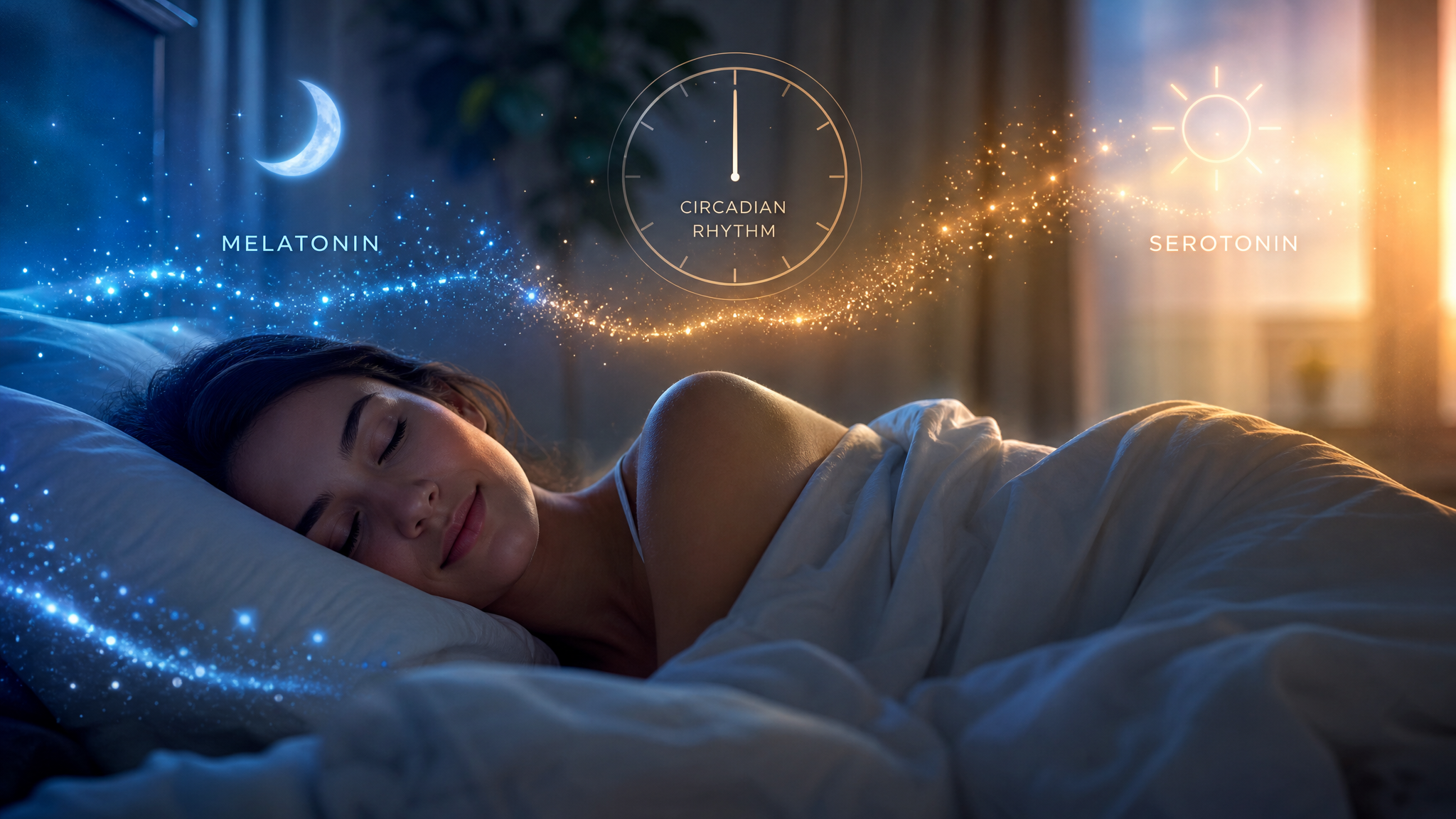
- Morning light exposure: Get 10–20 minutes of natural light within 30 minutes of waking to suppress residual melatonin and set your cortisol awakening response.
- Limit blue light: Avoid screens 60–90 minutes before bed, or use blue-light-blocking glasses.
- Caffeine: Has a half-life of 5–7 hours. A 3 PM coffee can still be 25% active at midnight.
- Alcohol: While sedating initially, alcohol suppresses REM sleep and causes rebound wakefulness in the second half of the night.
- Late meals: Eating within 2–3 hours of bedtime elevates core body temperature and can worsen acid reflux, both of which fragment sleep.
- Magnesium glycinate (200–400 mg): Supports GABA activity and muscle relaxation. Deficiency is common and associated with insomnia.
- Melatonin (0.5–1 mg): Low-dose melatonin is most effective for circadian phase shifting (jet lag, shift work) rather than as a sedative.
- L-theanine (100–200 mg): An amino acid from green tea that promotes relaxed alertness and may improve sleep quality without sedation.
2. Fasting Glucose and Insulin: The Blood Sugar Connection
Even one week of sleeping 5–6 hours per night can impair insulin sensitivity by up to 25%, according to research from the University of Chicago ([PMID: 10543671](https://pubmed.ncbi.nlm.nih.gov/10543671/)). The mechanism involves elevated cortisol and growth hormone dysregulation, both of which promote hepatic glucose output.
3. C-Reactive Protein (CRP): The Inflammation Alarm
CRP is one of the most sensitive markers of systemic inflammation. Multiple studies confirm that sleeping fewer than 6 hours per night is associated with high-sensitivity CRP (hs-CRP) levels above 3.0 mg/L—the threshold associated with elevated cardiovascular risk.
4. Leptin and Ghrelin: The Hunger Hormones
Sleep loss disrupts the balance between leptin (the satiety hormone) and ghrelin (the hunger hormone). After just two nights of restricted sleep, leptin levels drop by 18% and ghrelin rises by 28%, according to research published in PLOS Medicine ([PMID: 15602591](https://pubmed.ncbi.nlm.nih.gov/15602591/)).
5. Testosterone and Growth Hormone
The majority of testosterone and growth hormone (GH) secretion occurs during deep slow-wave sleep. Fragmented or shortened sleep dramatically reduces these anabolic hormones.
6. Thyroid-Stimulating Hormone (TSH)
Sleep deprivation can transiently elevate TSH, mimicking subclinical hypothyroidism. This effect is most pronounced after total sleep deprivation but can occur with chronic partial restriction as well.
Practical Strategies to Protect Your Biomarkers Through Better Sleep
Optimize Your Sleep Environment
Anchor Your Circadian Rhythm
Address Sleep Disruptors
Consider Evidence-Based Supplements (With Medical Guidance)
When to Seek Medical Evaluation
If you consistently sleep 7–9 hours but still wake unrefreshed, or if your bed partner reports snoring and gasping, consider evaluation for obstructive sleep apnea (OSA). OSA is present in an estimated 26% of adults aged 30–70 and is a major driver of the metabolic abnormalities described above. A home sleep test or polysomnography can confirm the diagnosis, and CPAP therapy has been shown to meaningfully improve insulin sensitivity, blood pressure, and inflammatory markers within weeks of treatment.
---
Take Control of Your Health Data
Ready to cross-reference your medications, supplements, and lab results in one place? [Health Intelligence Analyzer](/) helps you identify potential interactions, flag abnormal lab values, and optimize your health regimen with AI-powered insights. Start your free analysis today.