Sleep Tracking Biomarkers: How to Interpret HRV, SpO2, and Wearable Sleep Scores for Better Health
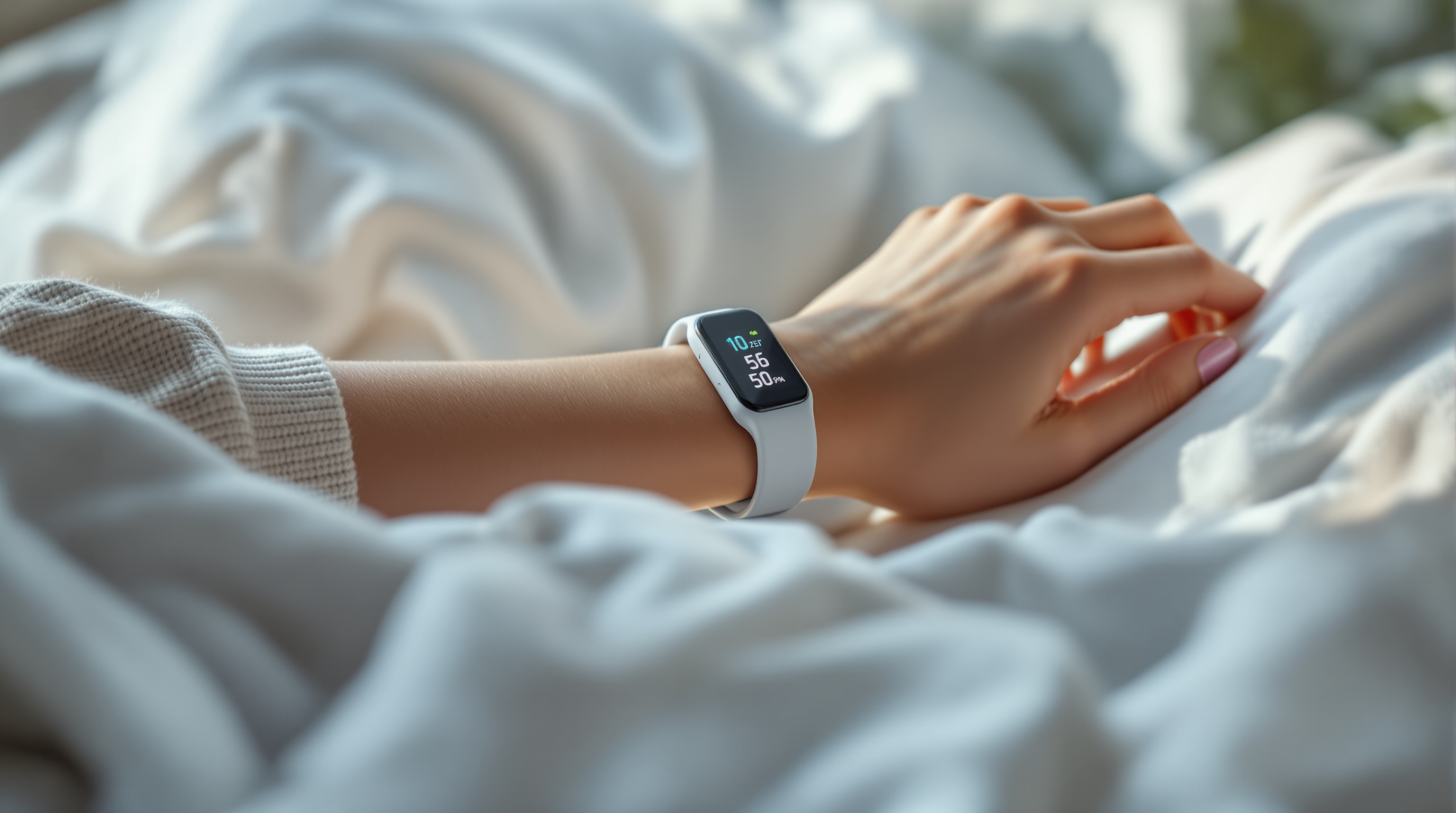
Medical Disclaimer: This article is for informational purposes only and does not constitute medical advice. Always consult with a qualified healthcare provider before making changes to your medications, supplements, or health regimen.
Why Your Wearable's Sleep Data Is More Powerful Than You Think
Millions of people now wear fitness trackers and smartwatches to bed every night, waking up to dashboards filled with sleep scores, heart rate variability (HRV) readings, blood oxygen saturation (SpO2) percentages, and REM cycle breakdowns. But most users glance at a number, shrug, and move on with their day.
That's a missed opportunity. When interpreted correctly, wearable sleep biomarkers can serve as an early warning system for cardiovascular stress, respiratory dysfunction, metabolic imbalance, and overtraining—often weeks before symptoms appear. This guide breaks down what each metric actually measures, what the science says about optimal ranges, and how to act on the data.
---
Heart Rate Variability (HRV): The Gold Standard of Recovery
What HRV Measures
Heart rate variability is the variation in time between consecutive heartbeats, measured in milliseconds (ms). Despite what the name implies, higher variability is better—it reflects a well-regulated autonomic nervous system (ANS) that can fluidly shift between sympathetic ("fight or flight") and parasympathetic ("rest and digest") states.
During sleep, your parasympathetic system should dominate, allowing your body to repair tissue, consolidate memory, and regulate hormones. A high overnight HRV indicates your nervous system is recovering efficiently. A low or declining HRV trend signals accumulated stress—physical, emotional, or immunological.
What the Research Says
A landmark study published in JAMA Cardiology (2021) found that lower resting HRV was independently associated with increased risk of atrial fibrillation, coronary artery disease, and all-cause mortality. The American Heart Association has recognized HRV as a clinically meaningful marker of cardiac autonomic function ([AHA, 2022](https://www.ahajournals.org/doi/10.1161/CIRCULATIONAHA.121.058167)).
Interpreting Your HRV
- Above your personal baseline: Good recovery; body is adapting well to stress load
- 10–20% below baseline for 1–2 days: Mild stress; consider lighter training and prioritize sleep
- >20% below baseline for 3+ days: Significant physiological stress; investigate illness, overtraining, alcohol intake, or emotional stressors
- Consistently low over weeks: Discuss with your physician; may warrant cardiovascular or hormonal workup
- 95–100%: Normal; no concern
- 90–94%: Mild hypoxemia; note frequency and duration; discuss with physician if recurring
- Below 90% for >5 minutes: Clinically significant; warrants formal sleep study (polysomnography)
- Frequent dips below 88%: Associated with increased cardiovascular and metabolic risk; seek evaluation promptly
- Total sleep time (TST)
- Sleep efficiency (time asleep ÷ time in bed)
- Sleep stage distribution (light, deep/slow-wave, REM)
- Resting heart rate during sleep
- HRV during sleep
- Restlessness / movement
- 85–100: Excellent recovery; all key metrics in optimal range
- 70–84: Good; minor deficits in one or two areas
- 60–69: Fair; meaningful recovery gaps; investigate contributing factors
- Below 60: Poor; likely impacting cognitive performance, immune function, and metabolic health
- Alcohol: Even moderate intake (1–2 drinks) significantly reduces REM in the first half of the night
- Cannabis: THC suppresses REM; CBD has a more neutral effect
- Beta-blockers and antidepressants (SSRIs): Known REM suppressants
- Sleep deprivation: Causes REM rebound but disrupts overall architecture
- [ ] Is my 7-day average HRV trending up, flat, or down?
- [ ] Did I have any nights with SpO2 dips below 90%?
- [ ] Is my sleep score averaging above 70?
- [ ] Am I getting at least 90 minutes of REM per night?
- [ ] Is my resting heart rate during sleep stable or elevated?
- Persistent SpO2 dips below 90% on multiple nights
- HRV declining >20% below baseline for more than 2 weeks without an obvious cause
- Sleep scores consistently below 60 despite good sleep hygiene
- REM consistently below 15% of total sleep time
- HRV is your best daily recovery metric—track trends, not single readings
- SpO2 can flag silent sleep apnea; review the overnight graph, not just the average
- Sleep scores are useful directional tools but not clinical diagnostics
- REM percentage reflects cognitive and emotional recovery quality
- Wearable data is most powerful when shared with your healthcare provider as part of a broader health picture
Key insight: HRV is highly individual. A reading of 45 ms may be excellent for one person and poor for another. Always track trends relative to your own 30-day rolling average, not population norms.
---
SpO2 (Blood Oxygen Saturation): Detecting Silent Respiratory Issues
What SpO2 Measures
SpO2 measures the percentage of hemoglobin in your blood that is carrying oxygen, captured via photoplethysmography (PPG) sensors in your wearable. Normal waking SpO2 is 95–100%. During sleep, minor dips are normal, but sustained drops can indicate serious conditions.
Sleep Apnea and Nocturnal Hypoxemia
Obstructive sleep apnea (OSA) affects an estimated 1 billion people worldwide, yet up to 80% of moderate-to-severe cases remain undiagnosed ([WHO, 2023](https://www.who.int/news-room/fact-sheets/detail/sleep-disorders)). During apneic episodes, breathing pauses cause SpO2 to drop—sometimes dramatically.
Research published in CHEST Journal (2020) demonstrated that consumer wearables can detect SpO2 dips consistent with OSA with sensitivity approaching 80% when drops below 90% are flagged ([CHEST, 2020](https://journal.chestnet.org/article/S0012-3692(20)30463-5/fulltext)).
Interpreting Your SpO2 During Sleep
---
Sleep Scores: Useful Summary or Oversimplification?
How Sleep Scores Are Calculated
Most wearable platforms (Oura, Fitbit, Garmin, Apple Watch) generate a composite sleep score from a proprietary algorithm weighing:
What a Good Sleep Score Looks Like
While algorithms differ by device, general benchmarks include:
The Limitations of Sleep Scores
A 2023 systematic review in npj Digital Medicine found that consumer wearables accurately detect sleep vs. wake states ~80% of the time but are less reliable at distinguishing specific sleep stages, particularly slow-wave sleep (SWS), compared to polysomnography ([npj Digital Medicine, 2023](https://www.nature.com/articles/s41746-023-00802-1)).
Bottom line: Use sleep scores as a directional trend indicator, not a clinical diagnosis. Consistent low scores over 2+ weeks are a meaningful signal worth investigating.
---
REM Sleep: The Cognitive and Emotional Repair Cycle
Why REM Matters
Rapid Eye Movement (REM) sleep is when your brain consolidates declarative memory, processes emotional experiences, and clears metabolic waste via the glymphatic system. Adults typically need 20–25% of total sleep time in REM—roughly 90–120 minutes for a 7-hour night.
Research from the NIH's National Institute of Neurological Disorders and Stroke confirms that chronic REM suppression is linked to impaired memory consolidation, increased anxiety, and elevated inflammatory markers ([NIH NINDS](https://www.ninds.nih.gov/health-information/public-education/brain-basics/brain-basics-understanding-sleep)).
What Suppresses REM
---
Putting It All Together: A Practical Monitoring Framework
Weekly Review Checklist
When to Escalate to Your Doctor
Bring your wearable data to your physician if you notice:
Many physicians now welcome wearable data exports as supplementary clinical information, particularly for evaluating sleep apnea risk, autonomic dysfunction, and cardiovascular health.
---
Key Takeaways
---
Take Control of Your Health Data
Ready to cross-reference your medications, supplements, and lab results in one place? [Health Intelligence Analyzer](/) helps you identify potential interactions, flag abnormal lab values, and optimize your health regimen with AI-powered insights. Start your free analysis today.