Zinc Supplementation: Benefits, Risks, and What Your Lab Results Reveal
Zinc Supplementation: Benefits, Risks, and What Your Lab Results Reveal
Medical Disclaimer: This article is for informational purposes only and does not constitute medical advice. Always consult with a qualified healthcare provider before making changes to your medications, supplements, or health regimen.
Zinc is one of the most underappreciated minerals in human health. It participates in over 300 enzymatic reactions, supports immune defense, accelerates wound healing, and plays a critical role in testosterone production and thyroid function. Yet zinc deficiency is surprisingly common—affecting an estimated 17% of the global population, according to the [World Health Organization](https://www.who.int/nutrition/topics/zinc_deficiency/en/).
Despite its importance, zinc supplementation is not without risk. Excess zinc can suppress copper absorption, impair immune function, and interfere with several medications. Understanding how to assess your zinc status through lab work—and how to supplement intelligently—is essential for anyone considering adding zinc to their health regimen.
Why Zinc Matters: Key Biological Roles
Zinc is classified as an essential trace mineral, meaning the body cannot produce it and must obtain it through diet or supplementation. Its biological roles are remarkably diverse:
Immune System Regulation
Zinc is critical for the development and function of immune cells, including neutrophils, natural killer cells, and T-lymphocytes. Research published in [Nutrients (NIH)](https://www.ncbi.nlm.nih.gov/pmc/articles/PMC6566566/) confirms that even mild zinc deficiency impairs immune responses and increases susceptibility to infections. During the COVID-19 pandemic, zinc's antiviral properties attracted renewed scientific interest, with studies suggesting it may inhibit viral RNA polymerase activity.
Wound Healing and Skin Health
Zinc is concentrated in the skin and plays a direct role in collagen synthesis, cell proliferation, and inflammatory regulation. Clinicians have long used zinc supplementation to accelerate wound healing in patients with chronic ulcers or post-surgical recovery. A [Cochrane Review](https://wounds-uk.com/wp-content/uploads/2024/09/WUK-image-5.png) found that zinc sulfate supplementation improved healing rates in patients with leg ulcers.
Hormonal Balance
Zinc is a cofactor for enzymes involved in testosterone synthesis and thyroid hormone conversion. Low zinc levels are associated with reduced testosterone in men and disrupted thyroid function in both sexes. A landmark study in [Nutrition (PubMed)](https://pubmed.ncbi.nlm.nih.gov/8875519/) demonstrated that zinc restriction in healthy young men significantly reduced serum testosterone levels within 20 weeks.
Cognitive Function and Mood
Zinc modulates neurotransmitter activity, particularly glutamate and GABA signaling. Deficiency has been linked to depression, cognitive decline, and impaired memory. Research in [Biological Psychiatry](https://pubmed.ncbi.nlm.nih.gov/23541145/) found that zinc supplementation enhanced the efficacy of antidepressant medications in treatment-resistant patients.
Who Is at Risk for Zinc Deficiency?
Certain populations face elevated risk of zinc insufficiency:
- Vegetarians and vegans: Plant-based diets are high in phytates, which bind zinc and reduce absorption by up to 45%
- Older adults: Reduced dietary intake and impaired absorption with age
- People with GI conditions: Crohn's disease, ulcerative colitis, and celiac disease impair zinc absorption
- Pregnant and breastfeeding women: Increased physiological demand
- Heavy alcohol users: Alcohol increases urinary zinc excretion
- People taking certain medications: Diuretics, ACE inhibitors, and proton pump inhibitors can deplete zinc
- Zinc gluconate: Well-tolerated, commonly found in lozenges; moderate bioavailability
- Zinc picolinate: Often cited for superior absorption; popular in functional medicine
- Zinc citrate: Good bioavailability with minimal GI side effects
- Zinc sulfate: Highly studied but more likely to cause nausea; best taken with food
- Zinc oxide: Lowest bioavailability; common in multivitamins but less effective therapeutically
- Take zinc between meals for best absorption, or with a small amount of food if GI upset occurs
- Avoid taking zinc within 2 hours of calcium supplements, iron supplements, or high-phytate foods (whole grains, legumes)
- Do not take zinc simultaneously with fluoroquinolone or tetracycline antibiotics—zinc can reduce their absorption by up to 50%
- Anemia (microcytic, hypochromic)
- Neurological symptoms (peripheral neuropathy, myelopathy)
- Immune dysfunction
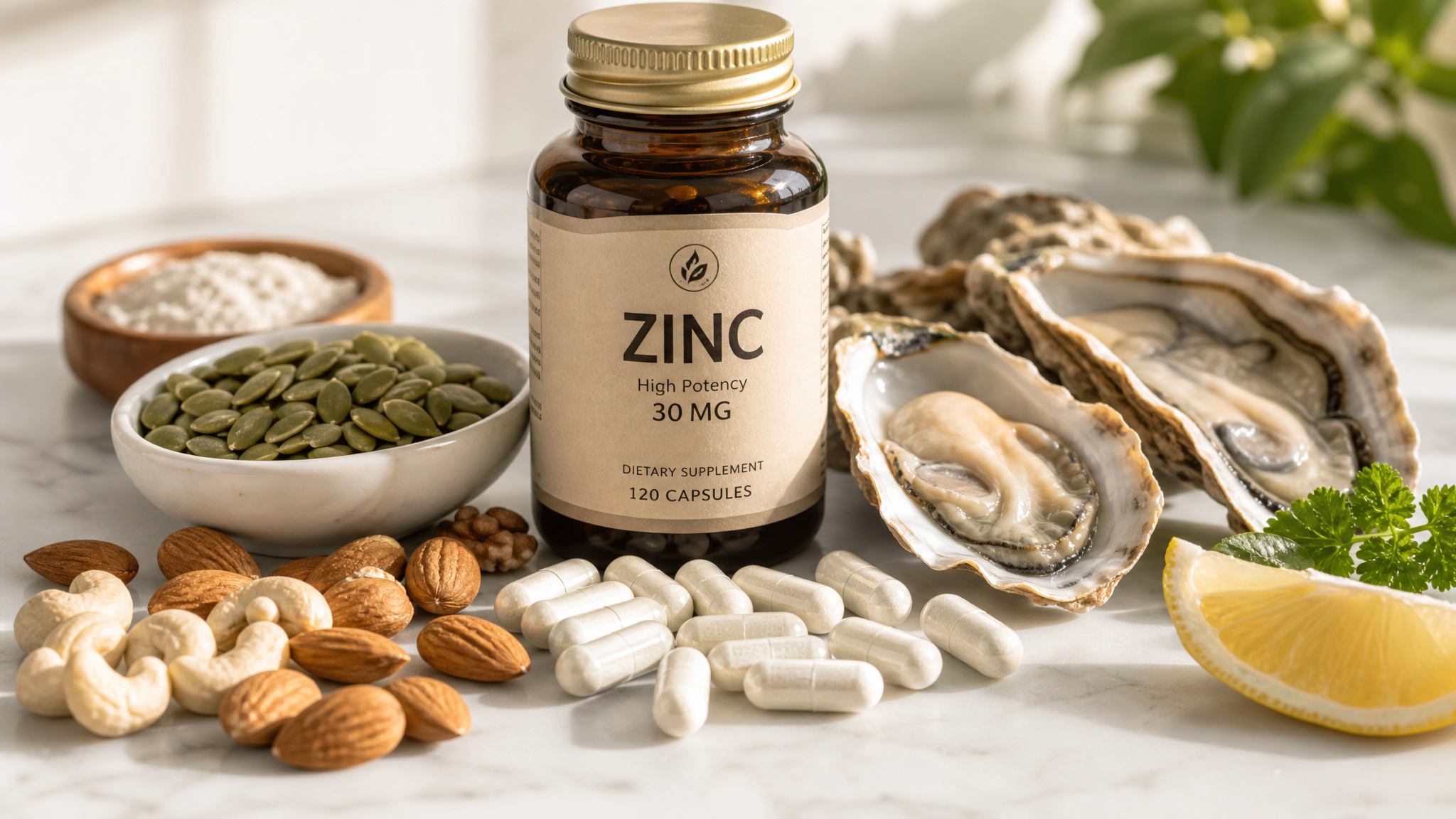
- Oysters: Highest zinc content of any food (~74 mg per 3 oz serving)
- Beef and lamb: ~5–7 mg per 3 oz serving
- Pumpkin seeds: ~2.2 mg per oz
- Hemp seeds: ~3 mg per 3 tablespoons
- Chickpeas and lentils: ~1.3–2.5 mg per cup (cooked)
- Cashews: ~1.6 mg per oz
- Zinc is essential for immunity, wound healing, hormone production, and cognitive function
- Deficiency is common, especially in vegetarians, older adults, and those with GI conditions
- Serum zinc is a useful but imperfect marker; monitor ALP and the copper-to-zinc ratio for a fuller picture
- Supplement with bioavailable forms (picolinate, citrate, gluconate) at doses within the 8–25 mg/day range
- Long-term supplementation above 25 mg/day requires copper co-supplementation to prevent deficiency
- Always separate zinc from antibiotics, iron, and calcium supplements by at least 2 hours
Reading Your Lab Results: Zinc Status Markers
Assessing zinc status through lab work is more nuanced than it appears:
Serum Zinc
The most commonly ordered test, serum zinc measures circulating zinc levels. Reference range: 70–120 mcg/dL (may vary slightly by lab). However, serum zinc reflects only about 0.1% of total body zinc and can be influenced by recent meals, stress, and inflammation. A normal serum zinc does not rule out tissue-level deficiency.
Plasma Zinc
Slightly more reliable than serum zinc, plasma zinc avoids the hemolysis artifact that can falsely elevate serum results. Many functional medicine practitioners prefer plasma zinc for accuracy.
Alkaline Phosphatase (ALP)
ALP is a zinc-dependent enzyme. Persistently low ALP (below 40 U/L) in the absence of other explanations can be an indirect marker of zinc deficiency. This is a useful secondary signal when serum zinc is borderline.
Copper-to-Zinc Ratio
Because zinc and copper compete for absorption, the copper-to-zinc ratio is an important functional marker. An optimal ratio is approximately 0.7–1.0. A ratio above 1.2 may indicate relative zinc deficiency or copper excess, both of which are associated with increased inflammation and oxidative stress.
Safe Supplementation: Dosing and Forms
The Recommended Dietary Allowance (RDA) for zinc is 11 mg/day for adult men and 8 mg/day for adult women, per the [NIH Office of Dietary Supplements](https://ods.od.nih.gov/factsheets/Zinc-HealthProfessional/). The Tolerable Upper Intake Level (UL) is 40 mg/day for adults.
Common Supplement Forms
Timing and Absorption Tips
The Copper Depletion Risk: A Critical Safety Concern
The most significant safety concern with long-term zinc supplementation is copper depletion. Zinc upregulates metallothionein in intestinal cells, which binds copper and prevents its absorption. Chronic supplementation with doses above 25 mg/day without copper co-supplementation can lead to:
The [FDA](https://www.fda.gov/) has issued warnings about zinc-containing denture creams causing copper deficiency neuropathy in heavy users. If supplementing with more than 15 mg of zinc daily for extended periods, consider adding 1–2 mg of copper to maintain balance.
Dietary Sources of Zinc
Before reaching for supplements, consider optimizing dietary zinc intake:
For plant-based eaters, soaking and sprouting legumes and grains can reduce phytate content and improve zinc bioavailability by 20–30%.
Key Takeaways
---
Take Control of Your Health Data
Ready to cross-reference your medications, supplements, and lab results in one place? [Health Intelligence Analyzer](/) helps you identify potential interactions, flag abnormal lab values, and optimize your health regimen with AI-powered insights. Start your free analysis today.